
Prelude to Battle: Texas Fights for Independence
By the spring of 1836, the Texian Revolution had reached a boiling point. After suffering defeats at the Alamo and Goliad, Texian forces, led by General Sam Houston, were retreating eastward. Meanwhile, Mexican President and General Antonio López de Santa Anna was in relentless pursuit, eager to crush the rebellion.
Santa Anna, believing the Texians were demoralized, made a critical tactical mistake—he split his forces, leaving his own army vulnerable. Houston, seeing an opportunity, moved swiftly toward San Jacinto, a strategic location near modern-day Houston, Texas.
Setting the Stage: Houston’s Strategy Takes Shape
On April 20, 1836, both armies set up camp near Buffalo Bayou. Santa Anna’s 1,300 Mexican troops were positioned in an open prairie, surrounded by water on three sides, limiting their ability to maneuver. Meanwhile, Houston’s 900 Texian soldiers camped nearby, hidden by a tree line and terrain that provided natural cover.
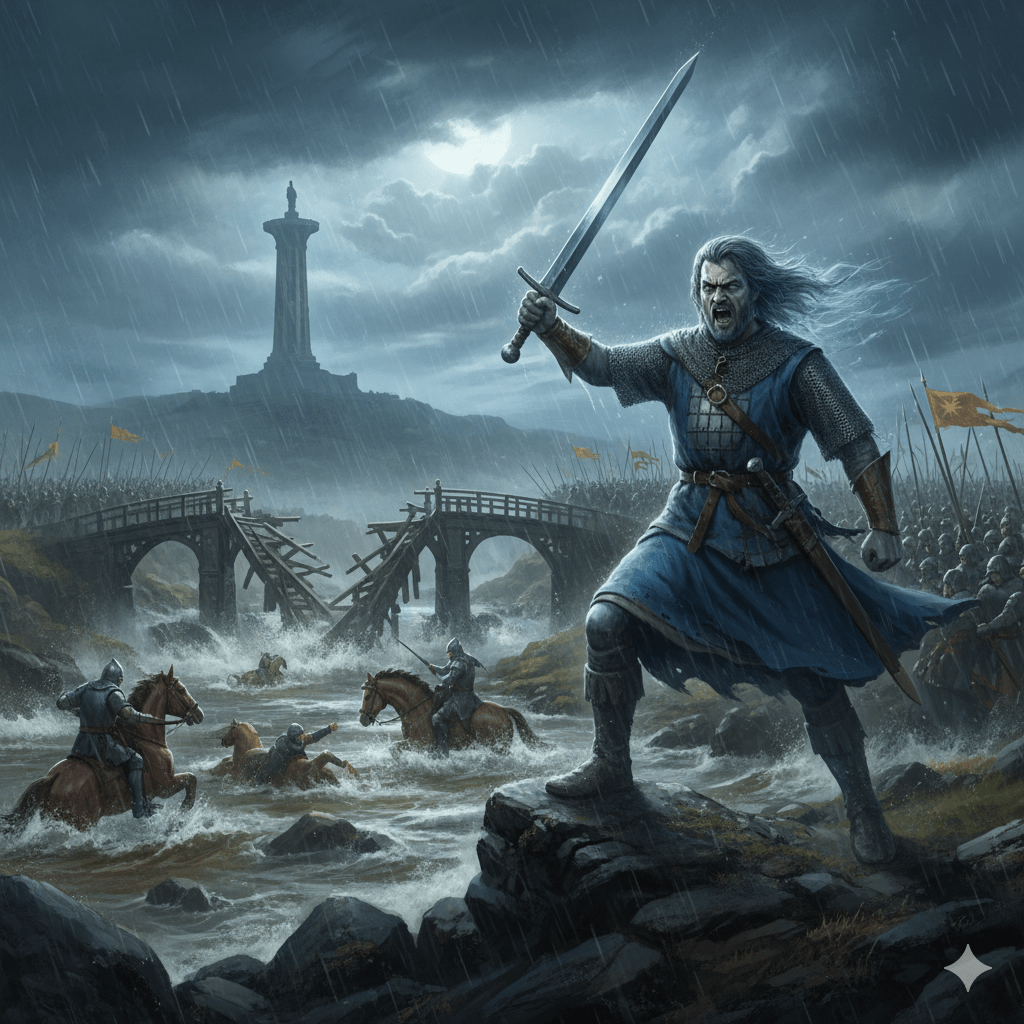
That night, Houston sent Deaf Smith, his trusted scout, on a critical mission—to destroy Vince’s Bridge, the main route connecting Santa Anna’s camp to reinforcements and a potential retreat. By severing this key escape route, Houston ensured that the Mexican forces would be trapped with no reinforcements and no easy way out.
While the Mexican army was fatigued from previous marches, the Texians rested and prepared. They maintained a low profile, keeping fires low and refraining from unnecessary noise to avoid alerting Santa Anna’s sentries.
The Surprise Attack: Precision, Timing, and Speed
At around 3:30 p.m. on April 21, Houston gave the order to attack. He deployed his forces in a strategic formation:
- Sherman’s Infantry (on the left flank) would lead the charge.
- Burleson’s Infantry (center) would provide supporting fire.
- Sidney Sherman’s Cavalry (on the right) would flank the enemy and cut off any escape routes.
- The “Twin Sisters” Cannons—two small but powerful artillery pieces gifted by the people of Cincinnati—would provide covering fire.
Using trees and rolling hills as cover, the Texians moved silently across the field. They advanced quickly and closed within 200 yards before opening fire, catching Santa Anna’s forces completely off guard.
The Texians fired one deadly volley, then charged on foot with bayonets and rifles, overwhelming the unprepared Mexican soldiers. Many Mexican troops were napping or cooking when the attack began, making the surprise even more devastating.
Santa Anna’s Army in Chaos
The battle turned into a massacre. Texian soldiers, shouting “Remember the Alamo! Remember Goliad!”, pushed through the Mexican camp with relentless force. Santa Anna’s men, disorganized and panicked, attempted to regroup but were cut down in the chaos. Some tried to flee toward Vince’s Bridge, only to find it destroyed—leaving them trapped.
Within 18 minutes, the Texians had completely overrun the Mexican camp. 600 Mexican soldiers were killed, 700 captured, and only a few managed to escape into the surrounding marshes.
Aftermath: A Nation is Born
Among the prisoners taken the next day was Santa Anna himself, found hiding in the tall grass dressed as a common soldier. The Texians forced him to sign orders for the Mexican army to retreat, effectively granting Texas its independence.
Legacy of San Jacinto
The Battle of San Jacinto remains one of the most decisive battles in history, proving that strategy, preparation, and timing can overcome larger forces. The Texian victory not only secured independence but also set the stage for Texas’ eventual annexation into the United States in 1845.
Today, the San Jacinto Monument stands as a tribute to those who fought in the 18-minute battle that changed history.
 History in 5 Minutes or less
Leave a comment