A Stranger from the Shadows
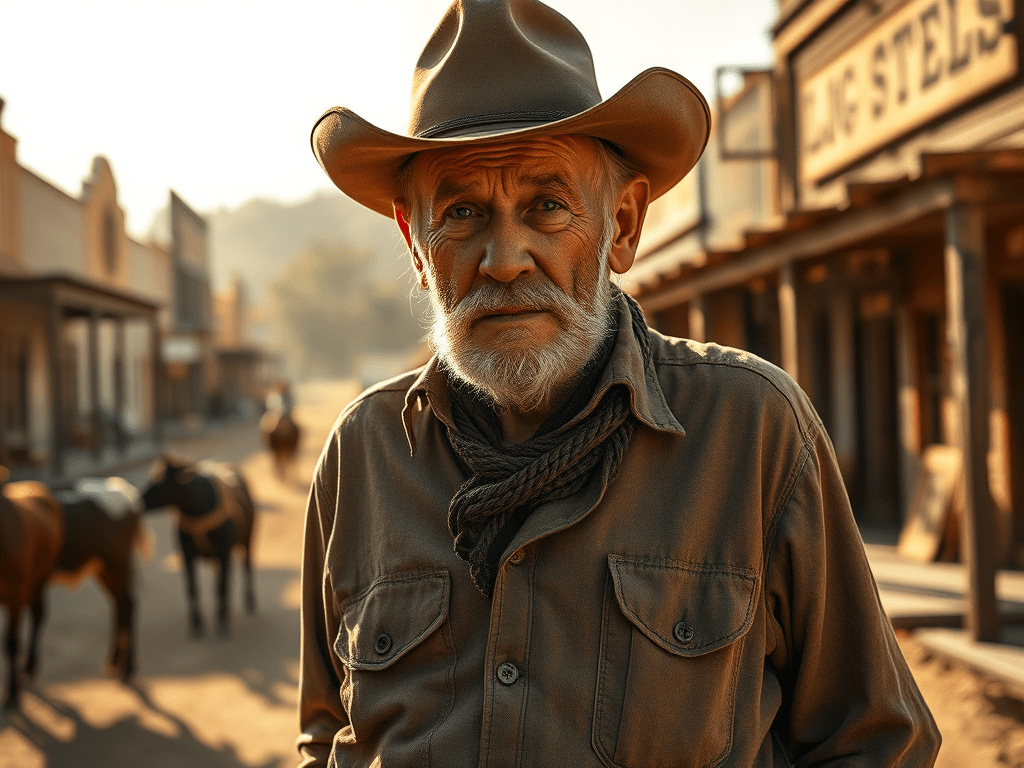
In the scorching summer of 1948, the sleepy town of Hico, Texas, was better known for cattle ranching and dusty roads than for legendary outlaws. That is, until a quiet old man named Ollie “Brushy Bill” Roberts began to whisper a secret that would stir imaginations and spark controversy across the American West. With a weathered face, a limp in his walk, and a mysterious glint in his eye, Brushy Bill claimed he was none other than Billy the Kid—the most infamous outlaw of the Old West, believed to have been shot and killed by Sheriff Pat Garrett in 1881.
At first glance, the claim seemed absurd. Billy the Kid, whose real name was William H. Bonney, had been reported dead at 21 years of age. Brushy Bill was well into his 80s. Yet something about the old man’s stories, the detail with which he described historical events, and the passion behind his plea for a long-promised pardon, made some begin to wonder: Could it be true? Had Billy the Kid outlived his legend?
Billy the Kid: Legend of the West
Billy the Kid’s story began in the slums of New York City, born Henry McCarty in either 1859 or 1860. He later adopted the name William H. Bonney and rode into Western history as Billy the Kid. After moving west with his family, young Henry found himself orphaned and adrift, falling in with outlaws and making a name for himself with a pistol.
By the late 1870s, he was embroiled in the Lincoln County War in New Mexico, a violent feud between rival factions of cattle ranchers, businessmen, and lawmen. Billy aligned with the Regulators, a group seeking revenge for the murder of rancher John Tunstall. The war made him both a hero and a villain, depending on who was telling the story.
Charismatic, fluent in Spanish, and fast with a gun, Billy the Kid became a folk legend. Stories of his exploits—his jailbreaks, his daring shootouts, and his wry sense of humor—spread far and wide. But the law was closing in. Captured in 1880 and sentenced to hang for the murder of Sheriff William Brady, Billy escaped in dramatic fashion, killing two deputies in the process.
His freedom was short-lived. On July 14, 1881, Sheriff Pat Garrett claimed to have shot Billy in the dark at Pete Maxwell’s ranch in Fort Sumner. The Kid was buried the next day—but rumors that he had survived began circulating almost immediately.
An Old Cowboy’s Secret
Brushy Bill Roberts lived a quiet life for decades under various aliases, including Ollie L. Roberts. In the 1940s, he settled in Hico, Texas, where he eventually began speaking with a few close confidants about his past. In 1949, Brushy approached William Morrison, a lawyer and amateur historian investigating old west legends.
Brushy told Morrison that he had been living under an assumed identity since faking his death in 1881. He claimed that Pat Garrett had not killed him, but rather a man named Billy Barlow. Garrett, under pressure to produce results and growing weary of chasing the Kid, agreed to the deception. In exchange, Billy would vanish from public life.
Roberts described in vivid detail the events of the Lincoln County War, his escape from jail, and his relationships with key figures such as John Chisum and Governor Lew Wallace. He even bore physical scars that matched documented injuries Billy the Kid had sustained. Intrigued, Morrison began compiling evidence to support Brushy’s claim.
The Pardon Campaign
Brushy Bill wasn’t seeking fame or money. By 1950, his health was failing, and he had only one goal: to secure the pardon that had once been promised to Billy the Kid by Governor Lew Wallace. Wallace had indeed made an offer of immunity in exchange for testimony against corrupt officials during the Lincoln County War. Billy kept his end of the bargain, but the pardon never materialized.
Morrison believed Brushy Bill’s story and began a campaign to gain official recognition. He collected affidavits from people who claimed to know Billy the Kid and supported Brushy’s identity. He also commissioned photographic analysis comparing known images of the Kid to photos of Brushy.
In December 1950, Morrison and Roberts traveled to Santa Fe to meet with New Mexico Governor Thomas Mabry. The meeting quickly turned into a media spectacle. Under intense questioning and the strain of public scrutiny, the elderly Brushy suffered a stroke during the interview. The pardon request was denied.
On December 27, 1950, Brushy Bill Roberts collapsed and died on a street in Hico. Despite the denial, his tombstone reads: “William H. Bonney, a.k.a. Billy the Kid.”
Evidence and Intrigue
The debate over Brushy Bill’s identity has persisted for decades. Critics argue that the historical record clearly shows Billy the Kid died in 1881. Sheriff Garrett’s account, though self-serving and at times inconsistent, is the primary source for the event. But those sympathetic to Brushy Bill point to a litany of oddities:
- The body buried in Fort Sumner was never definitively identified. There was no autopsy, no photographs of the corpse, and the grave is unmarked by modern standards.
- Several elderly New Mexico residents signed affidavits in the 1940s and 1950s identifying Brushy as the Kid.
- Photographic analyses have compared facial structures between images of Billy the Kid and Brushy Bill, with some software-based comparisons showing high degrees of similarity.
Furthermore, some historians speculate that Garrett may have killed another man—perhaps Billy Barlow—and passed the body off as Billy the Kid’s. Garrett was under immense political pressure, and producing the dead body of an outlaw, even if it wasn’t the right one, might have been enough to close the case and restore public confidence.
Why Would Garrett Lie?
If Pat Garrett did not kill Billy the Kid, what could have motivated the deception? The answer may lie in politics, pressure, and personal gain. By 1881, Garrett’s reputation was on the line. He had been elected sheriff largely on the promise that he would capture the Kid. After a year of chasing the elusive outlaw, Garrett needed a win.
According to Brushy Bill, Garrett and Billy had formed a tenuous truce. Both men were tired of running and hiding. Faking the death allowed Garrett to claim victory and move on to a political career, while the Kid could disappear into obscurity.
This theory also explains why Garrett’s own written account of the shooting, “The Authentic Life of Billy the Kid,” is filled with inconsistencies. It was ghostwritten and aimed more at sensationalism than truth. Garrett himself faced questions about the legitimacy of the killing almost immediately after it occurred.
Hico’s Claim to Fame
Today, Hico, Texas, proudly embraces its connection to the Brushy Bill legend. The town’s Billy the Kid Museum showcases artifacts, photographs, and documents supporting the claim that the Kid lived out his days in Texas.
Tourists flock to the site, drawn by the intrigue and romance of the Old West. Local businesses capitalize on the myth, and Brushy Bill has become a central figure in the town’s identity. His modest grave, located in Hico Cemetery, is regularly adorned with flowers, coins, and notes from visitors who believe—or want to believe.
Though mainstream historians generally accept the 1881 death as fact, interest in alternative theories remains strong. Efforts to exhume the bodies buried in Fort Sumner and compare DNA with known relatives have been stymied by legal and ethical roadblocks. Until such evidence is permitted and tested, the mystery will endure.
The Myth That Won’t Die
Whether Brushy Bill Roberts was a hoaxer, a deluded old man, or truly Billy the Kid, his story has earned a place in the annals of American folklore. The mystery appeals to a deep cultural desire to believe in second chances, unfinished stories, and legends that defy death.
Billy the Kid has become a symbol of rebellion, youth, and the untamable spirit of the American West. Brushy Bill, whether or not he was the real deal, resurrected that symbol and gave it new life at a time when the myth was beginning to fade.
Perhaps that’s the greatest trick of all—not escaping the bullet, but escaping time itself.
References
- Nolan, Frederick. The West of Billy the Kid. University of Oklahoma Press, 1998.
- Utley, Robert M. Billy the Kid: A Short and Violent Life. University of Nebraska Press, 1989.
- Garrett, Pat. The Authentic Life of Billy the Kid. 1882.
- Wallis, Michael. Billy the Kid: The Endless Ride. W. W. Norton & Company, 2007.
- PBS. “The Search for Billy the Kid.” American Experience, PBS, 1994.
- Hico Chamber of Commerce. Billy the Kid Museum. https://www.hico-tx.com/billy-the-kid-museum
- True West Magazine. “Did Pat Garrett Really Kill Billy the Kid?” June 2011.
- McCubbin, Robert. “Photo Comparison and Facial Recognition of Billy the Kid.” Wild West History Association Journal, 2005.

 History in 5 Minutes or less
Leave a comment