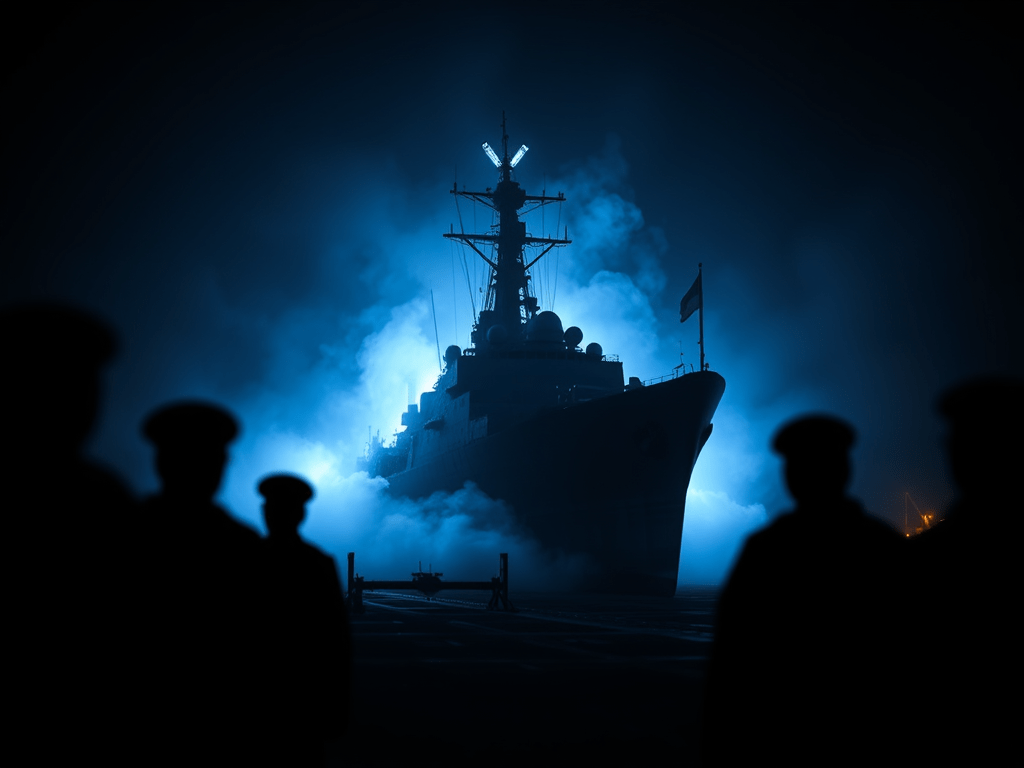
A Whisper in the Waves: Setting the Scene
During the height of World War II, the U.S. Navy was desperate to gain any technological advantage over Axis forces. Allied scientists had already made strides in radar, sonar, and codebreaking, but whispers emerged of a far more fantastic development—a ship rendered invisible, or even teleported, by military scientists.
The alleged event took place at the Philadelphia Naval Shipyard in October 1943, involving a newly commissioned destroyer escort: the USS Eldridge (DE-173). The story, which would only gain traction years later, suggested the ship didn’t just disappear from radar—it vanished entirely from sight and then rematerialized hundreds of miles away.
Though dismissed by military authorities, the “Philadelphia Experiment” tapped into a perfect storm of wartime secrecy, emerging physics, and a growing cultural fascination with conspiracies and government experiments. It was a tale too good—or too terrifying—to ignore.
Origins of the Legend: A Letter from the Shadows
The story would have faded into obscurity were it not for a strange letter sent in 1955 to Morris K. Jessup, an author who had just published The Case for the UFO. The letter came from a man identifying himself as Carlos Allende, a mysterious and eccentric figure who claimed to have seen the Eldridge vanish and reappear in a flash of blue light.
Allende claimed to be a merchant marine who had watched the event unfold from the deck of the SS Andrew Furuseth, docked nearby. He described an experiment gone horribly wrong—crew members suffering from severe disorientation, some materializing partially fused to the ship’s metal deck, others going insane, and some reportedly vanishing into thin air.
Allende credited this to the Navy’s exploitation of Einstein’s unified field theory, a real but unfinished theory Einstein had been working on that sought to unify gravity and electromagnetism. He claimed that the government had weaponized these ideas for military invisibility.
Jessup initially dismissed Allende as a crackpot. But then came an unexpected twist: the Office of Naval Research (ONR) received a heavily annotated copy of Jessup’s book, allegedly containing comments written by Allende and two other mysterious figures. The notes spoke with authority about alien technology, teleportation, and naval invisibility experiments.
The ONR printed several copies of this annotated version—now known as the Varo Edition—raising eyebrows. Why would a government agency reprint a UFO book with conspiracy-laden notes unless there was something to hide?
The Ship That Sparked a Thousand Theories
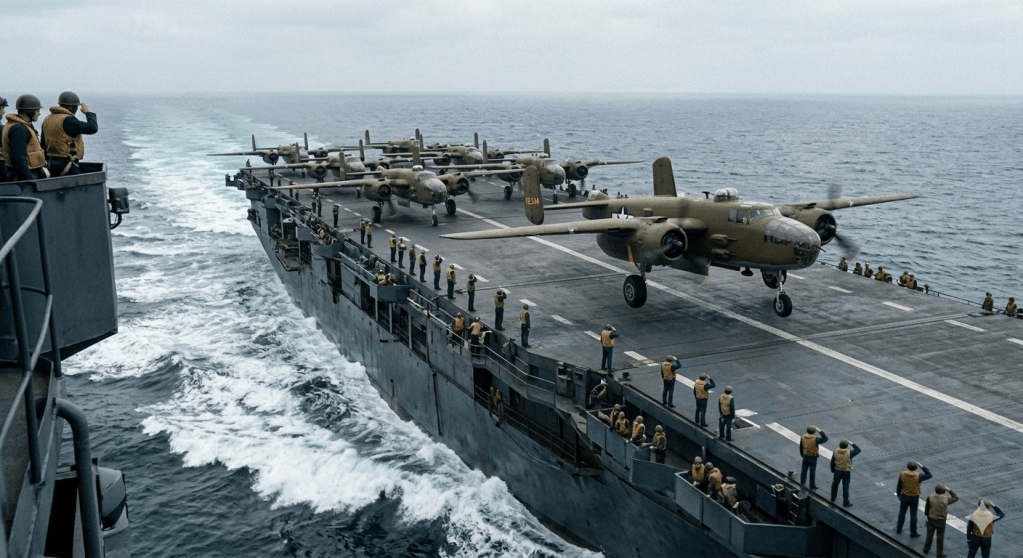
The USS Eldridge, a Cannon-class destroyer escort, was a real ship, launched in July 1943 and commissioned in August. Its wartime service is well documented: convoy escort missions between New York, Casablanca, and the Mediterranean.
However, Navy logs clearly place the ship nowhere near Philadelphia during the supposed experiment. In fact, naval records show the Eldridge was in New York and Bermuda during the month of October 1943. The confusion may have stemmed from the shrouded and complex convoy schedules, designed to prevent German U-boats from predicting ship movements.
Despite this clear paper trail, conspiracy theorists argue that records can be falsified. They point out the Navy’s interest in electromagnetic degaussing—a real process used to reduce ships’ magnetic fields and avoid triggering mines. Some suggest that early degaussing experiments, when misunderstood or sensationalized, may have seeded the myth.
Others link the secrecy around military projects, like the Manhattan Project, as proof that something incredible could have happened—hidden behind the classified veil of wartime necessity.
Einstein’s Shadow: Theoretical Science Meets the Supernatural
Perhaps the most fascinating and absurd part of the Philadelphia Experiment legend is its supposed foundation in Einstein’s unified field theory. This real theory, pursued by Einstein during his later years, sought to unite the fundamental forces of nature—gravity and electromagnetism—into a single elegant equation.
Although Einstein never completed this theory, Allende and other proponents claimed the Navy had cracked it and built experimental technology based on it. They describe massive electromagnetic coils installed on the Eldridge, which generated a field that could warp space-time—bending light or even creating a localized wormhole.
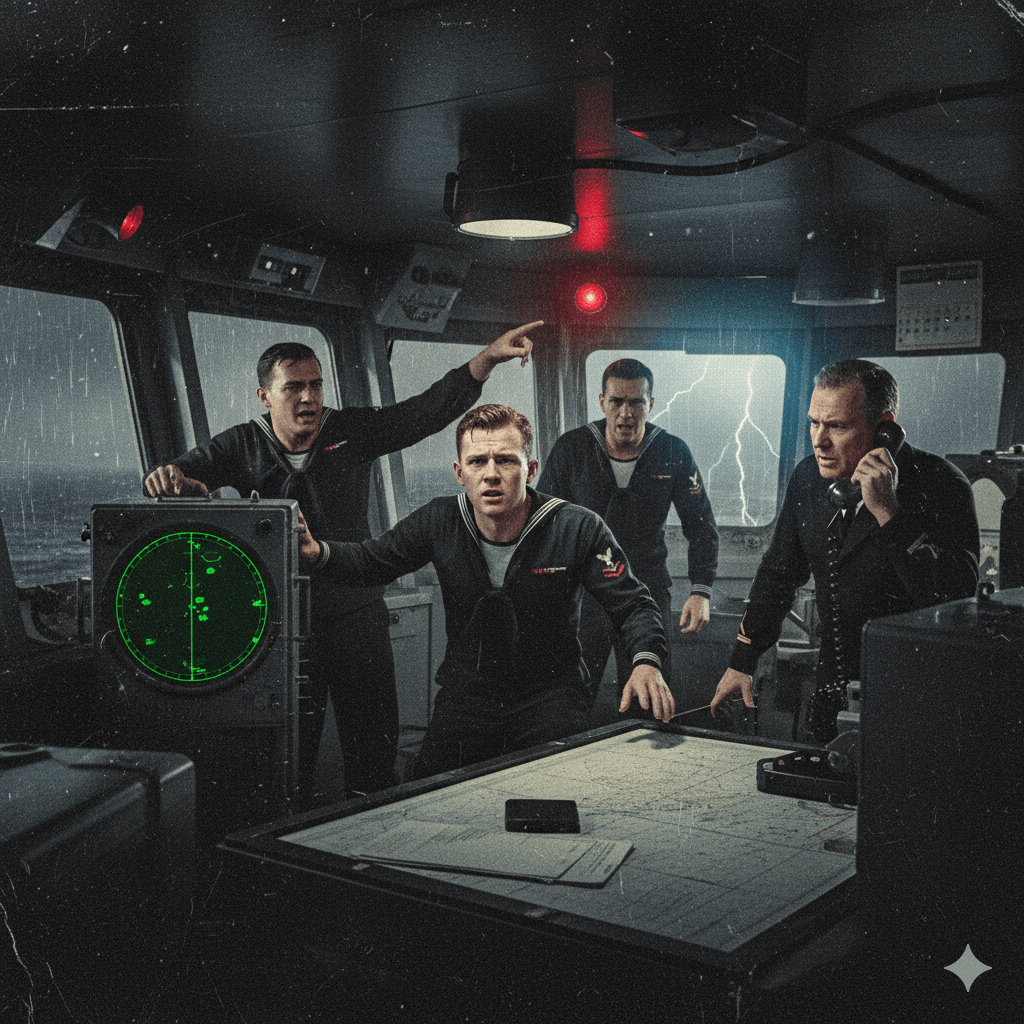
In this version of the story, the experiment initially succeeded—making the Eldridge invisible, or cloaked—but at a horrible cost. The human mind and body, unprepared for such distortions in time and space, allegedly suffered traumatic consequences. Reports included sailors “phasing” in and out of our dimension, severe nausea, and horrifying injuries.
Of course, no legitimate physicist has ever endorsed such claims. The unified field theory remains incomplete, and even modern science cannot teleport objects or people. Still, the idea that top-secret military scientists may have pushed physics to its breaking point remains a compelling piece of the puzzle for many believers.
Crew Testimonies: Eyewitnesses or Afterthoughts?
While the legend flourished in books and films, those closest to the supposed event—the crew of the Eldridge—have consistently and emphatically denied any such experiment occurred.
Surviving sailors, including Edward Dudgeon, spoke publicly in the 1990s and 2000s, dismissing the story as complete fiction. Dudgeon explained that much of the confusion may have originated from the Navy’s efforts to keep convoy routes secret. For example, ships like the Eldridge were often moved through the Norfolk–Philadelphia inland canal route, which could give the illusion of rapid travel between cities.
Moreover, Dudgeon described Allende as a fantasist. Investigators who met Allende found him to be evasive and inconsistent. Over the years, Allende gave conflicting accounts, sometimes admitting to inventing the story, other times doubling down.
None of the Eldridge’s ship logs, maintenance reports, or mission documents show any signs of unusual activities. The ship’s degaussing equipment was routine. There were no massive power surges, no teleportation, and certainly no disappearances.
But in the world of conspiracy theories, denial is often seen as further proof—a symptom of a cover-up rather than the end of the trail.
From Fringe to Pop Culture Phenomenon
Like many great legends, the Philadelphia Experiment’s persistence owes much to popular culture. In 1984, the story received the Hollywood treatment with the film The Philadelphia Experiment, which reimagined the event as a top-secret teleportation trial gone awry, launching two sailors into the future.
The film’s success helped introduce the legend to a broader audience. Books, documentaries, and talk shows soon followed. Conspiracy theorists expanded the narrative to include links to the Montauk Project, a supposed mind-control and time-travel program conducted at Montauk Air Force Station in New York during the Cold War.
These stories bled into other conspiracy lore: UFO technology, Nazi experiments, parallel universes, and CIA mind-control. The Philadelphia Experiment became a mythic node—a central piece of a broader belief that the U.S. government was conducting unimaginable experiments behind closed doors.
A Tale of Two Realities
By the early 2000s, the Philadelphia Experiment had taken on a dual identity. In the realm of historical fact, it was thoroughly debunked: a mishmash of misunderstandings, misremembered events, and outright fabrication. But in the realm of legend, it remained unassailable—symbolizing the unknown depths of military secrecy and the dangerous allure of forbidden science.
The story also speaks to the era’s cultural anxieties. In the wake of World War II, the atomic bomb had shown the world that once-unimaginable power could become reality. The idea that the government might also be experimenting with invisibility, teleportation, or time travel no longer seemed absurd—it seemed plausible.
In this way, the Philadelphia Experiment is not just a fringe tale. It’s a psychological mirror reflecting humanity’s curiosity, fear, and desire to believe in hidden truths just beneath the surface of accepted history.
Conclusion: History’s Ghost Ship
The USS Eldridge was a real ship with a verifiable service record. Yet the shadow of the Philadelphia Experiment has followed it into history like a ghostly echo.
While there is no credible evidence that any invisibility or teleportation experiment took place, the story continues to fascinate. It’s a modern myth rooted in misunderstood science, wartime secrecy, and the human tendency to fill in the blanks with imagination.
Whether you believe it to be a hoax, a cover-up, or just a great story, the Philadelphia Experiment endures—not because of what happened, but because of what we want to believe happened.
Sources
- Jessup, Morris K. The Case for the UFO. Citadel Press, 1955.
- Berlitz, Charles, and Moore, William L. The Philadelphia Experiment: Project Invisibility. Grosset & Dunlap, 1979.
- Naval History and Heritage Command. “USS Eldridge (DE-173).”
https://www.history.navy.mil - Vallee, Jacques. Messengers of Deception: UFO Contacts and Cults. And/Or Press, 1979.
- Ellis, Bill. Aliens, Ghosts, and Cults: Legends We Live. University Press of Mississippi, 2003.




 History in 5 Minutes or less
Leave a comment