
Prologue: A Man, a Legend, a Battlefield
On the morning of June 18, 1815, Napoleon Bonaparte stood on the ridge near La Belle Alliance, his hand tucked into his coat, staring toward the rolling Belgian countryside. Before him stretched the destiny of Europe. Behind him, an army of veterans—the Grande Armée reborn—waited for the word to advance. If he won, France could rise again, and the world might once more bow before the Corsican who had crowned himself Emperor. If he lost, it was the end.
The battle that followed—Waterloo—was not merely a clash of armies. It was the thunderous finale of nearly two decades of war that had redrawn the map of Europe and tested the limits of human ambition.
The Road Back: Napoleon’s Hundred Days
In 1814, Napoleon’s empire crumbled. Crushed by the combined might of Austria, Prussia, Russia, and Britain, he was forced to abdicate and banished to Elba, a speck in the Mediterranean. Most men might have settled into exile, but Napoleon was no ordinary man.
In March 1815, he escaped, landed in France, and marched north. Soldiers sent to arrest him instead cheered him. “The eagle,” he proclaimed, “flies from steeple to steeple until it reaches the towers of Notre-Dame.” Within weeks, he was back on the throne.
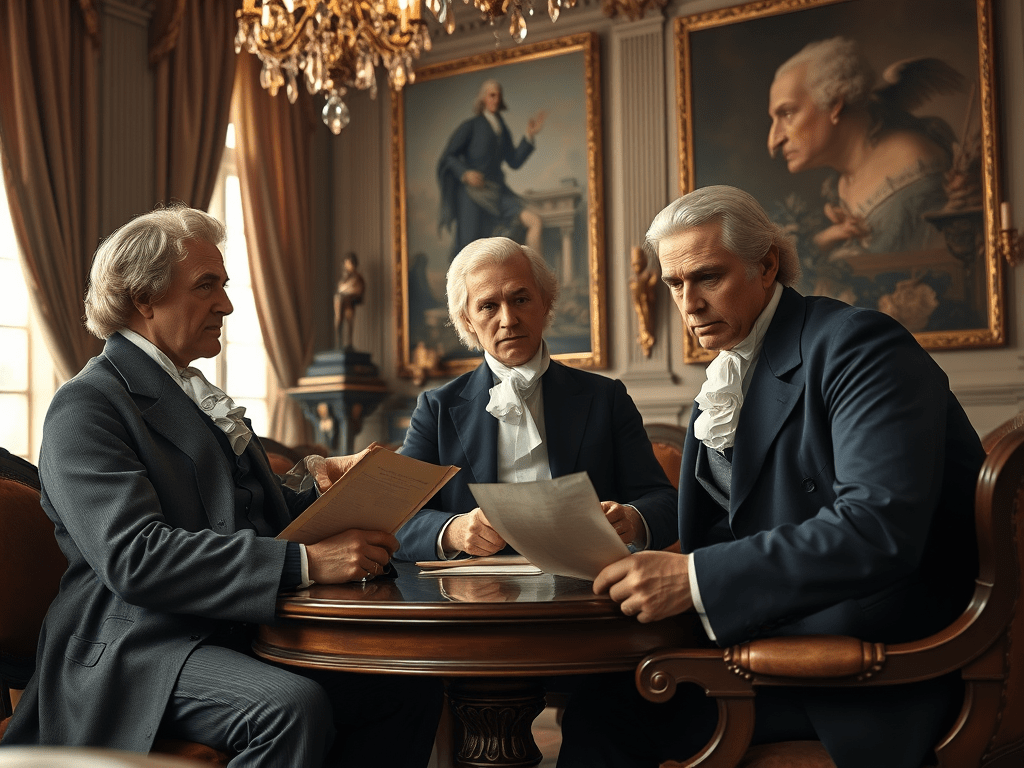
Europe panicked. At the Congress of Vienna, diplomats declared him an outlaw. Armies gathered to crush him once and for all. Napoleon had only one option: strike first, defeat his enemies before they could unite, and force a peace on his terms.
The Players: Wellington and Blücher
Facing Napoleon were two men very different in style but united in purpose.
- Arthur Wellesley, the Duke of Wellington, a cool-headed British general, was famous for his defensive genius. He had beaten Napoleon’s marshals in Spain and Portugal but had never faced the Emperor himself.
- Field Marshal Gebhard Leberecht von Blücher, a fiery Prussian in his seventies, was known as “Marshal Forwards” for his aggressive spirit. He had no subtlety but a great deal of courage.
Napoleon’s plan was simple but daring: defeat Blücher’s Prussians at Ligny, drive them east, then turn and smash Wellington’s Anglo-allied army before the Prussians could recover.
At Ligny on June 16, Napoleon did beat Blücher—but not decisively. Blücher retreated in good order, his army bloodied but not broken. Meanwhile, Marshal Ney, Napoleon’s trusted lieutenant, fought Wellington to a standstill at Quatre Bras but failed to prevent his withdrawal. Instead of dividing his foes, Napoleon now faced the prospect of them joining forces.
The Battlefield: Mud and Misfortune
On June 18, Napoleon deployed his army south of the village of Waterloo. Wellington, with about 68,000 men, held a ridge behind the farms of Hougoumont and La Haye Sainte. His men dug in behind hedges and sunken lanes, creating strong defensive positions. Napoleon commanded around 72,000 veterans, including the vaunted Imperial Guard.
The night before the battle, heavy rain had soaked the fields. Mud clung to boots, wheels, and hooves. Napoleon delayed his attack until midday, hoping the ground would dry. That delay—hours that seemed small at the time—gave Blücher the chance to march his Prussians toward the battlefield.
The Opening Act: Hougoumont
At 11:30 a.m., Napoleon opened with a diversionary attack on the walled farm of Hougoumont, held by British and German troops. What was meant as a feint turned into a daylong struggle. The French threw regiment after regiment against its stout walls. The Guardsmen inside, supported by musketry and cannon, held on grimly.
Napoleon committed far more troops than intended, bleeding his army against a position that never fell. Wellington later said, “The success of the battle turned upon the closing of the gates at Hougoumont.”
La Haye Sainte and the French Cavalry Charges
By early afternoon, Napoleon unleashed his main assault. Marshal Ney led columns of French infantry against the center of Wellington’s line. They advanced across the sodden fields under punishing artillery fire. At first, they seemed unstoppable, but the ridge and its defenders—British redcoats, Dutch-Belgians, and German allies—stood firm.
In the chaos, Ney believed the Allies were wavering. Lacking clear communication with Napoleon, he launched one of history’s most famous cavalry charges. Thousands of cuirassiers, shining in breastplates and helmets, thundered uphill.
But Wellington’s infantry knew the drill. They formed squares—bristling hedges of bayonets. The cavalry circled and slashed but could not break through. Time after time, they charged, only to be repulsed with terrible losses.
Meanwhile, the farmhouse of La Haye Sainte, held by German troops of the King’s German Legion, became a linchpin of the Allied center. French attacks surged against it all day. Late in the afternoon, it finally fell, opening a dangerous gap. Wellington’s situation grew desperate.
The Prussians Arrive
As the French hammered Wellington, the first Prussian units began to arrive on Napoleon’s right flank. At Plancenoit, the Prussians clashed with French troops in brutal street fighting. Napoleon had to divert precious reserves, including the Young Guard, to hold them back.
This was the moment Napoleon had feared: instead of fighting one enemy, he was now fighting two. Yet he still believed he could win by breaking Wellington before the Prussians fully deployed.
The Emperor’s Last Card: The Imperial Guard
By early evening, both armies were near exhaustion. The fields were littered with bodies, the air choked with smoke. Napoleon decided it was time to play his trump card: the Imperial Guard, his most elite troops, the men who had never known defeat.
With drums beating, the Guard advanced up the ridge. Their bearskin hats and iron discipline struck fear into enemies across Europe. Napoleon himself watched from behind, expecting victory.
But Wellington had held back his own reserves. As the Guard climbed the slope, Allied infantry unleashed volleys at close range. Dutch and British units poured fire into their flanks. At a crucial moment, Wellington stood up in the saddle, waved his hat, and ordered, “Up, Guards, and at them!” The British Guards counterattacked.
To the shock of the world, the Imperial Guard faltered. Then they broke.
Collapse and Rout
The cry went up: “La Garde recule!”—the Guard is retreating. It was unthinkable. Panic spread. French morale collapsed. Soldiers threw down weapons and fled. Napoleon tried to rally them, but the tide was irreversible.
By nightfall, the French army was in full retreat, streaming south toward Charleroi. Napoleon himself narrowly escaped capture. Wellington and Blücher met amid the carnage at La Belle Alliance, agreeing that the day’s victory was decisive.
The Aftermath: The End of an Era
Waterloo sealed Napoleon’s fate. He fled to Paris, tried briefly to rally political support, and then abdicated again. This time, the Allies showed no mercy. He was exiled to the remote island of St. Helena in the South Atlantic, where he lived under British guard until his death in 1821.
For Europe, Waterloo ushered in nearly a century of relative peace, as the victors at Vienna rebalanced the continent. For Britain, it cemented Wellington’s reputation as a national hero. For Prussia, it marked a step toward future greatness.
And for Napoleon, it was the tragic final act of a man who once reshaped the world.
Why Waterloo Still Matters
Waterloo is more than a battle. It’s a symbol of hubris, fate, and the limits of ambition. Napoleon’s genius had carried him from a Corsican artillery officer to Emperor of France. Yet on a muddy Belgian field, against a coalition of stubborn enemies, even his brilliance could not prevail.
As the French writer Victor Hugo later put it:
“Waterloo is not a battle; it is the changing face of the universe.”
Sources
- Chandler, David. The Campaigns of Napoleon. Scribner, 1966.
- Roberts, Andrew. Napoleon: A Life. Penguin, 2014.
- Hamilton-Williams, David. Waterloo: New Perspectives. John Wiley & Sons, 1993.
- Hofschröer, Peter. 1815: The Waterloo Campaign. Greenhill Books, 1999.
- Wellington, Duke of. Dispatches. Various editions.


 History in 5 Minutes or less
Leave a comment