
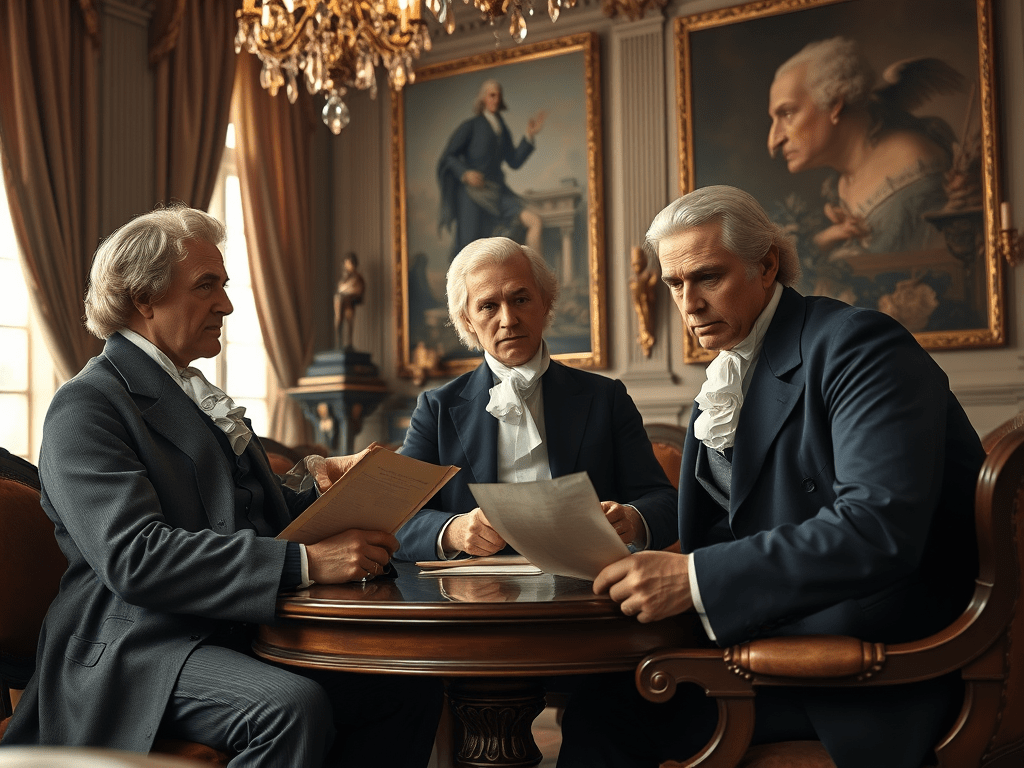
It was a clear crisp morning on July 16, 1945 and the sleek USS Indianapolis sat at anchor, in the calm Pacific sun. Its crew of 1,196 sailors and Marines went about their routines, unaware that their vessel was about to embark on a mission shrouded in secrecy. In the captain’s quarters, Charles B. McVay III, a seasoned and steady officer, read the orders handed to him by a courier. The ship was to deliver components of the most powerful weapon ever created to Tinian Island. *
McVay wasn’t told much. All he knew was the cargo included a lead-lined crate, accompanied by two men in civilian clothing who would guard it as if their lives depended on it. The words top secret emblazoned the operation. There was no time for questions. The war was nearing its climax, and this mission might hold the key to ending it.
A Race Against Time
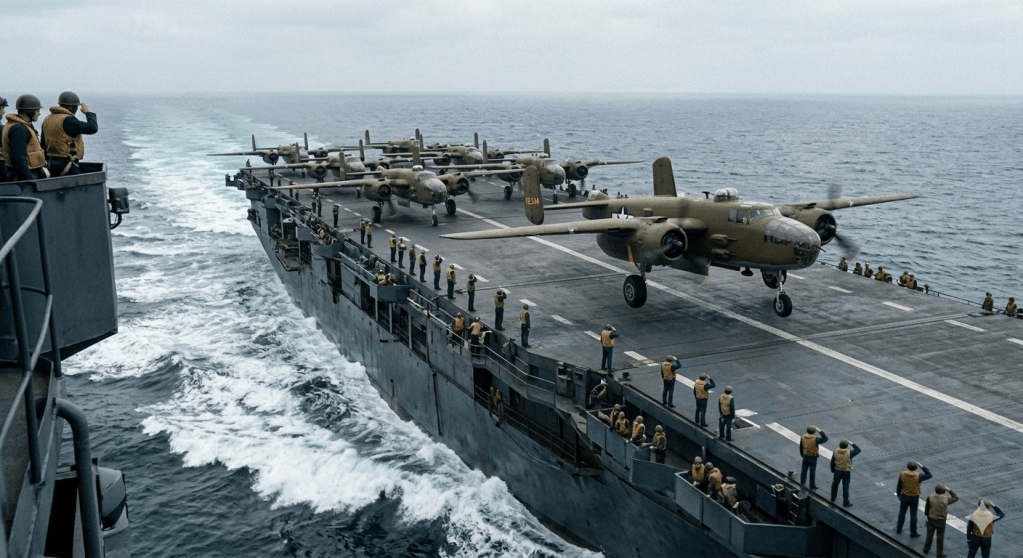
As the Indianapolis departed from the Mare Island Naval Shipyard, the mood aboard was a mix of excitement and unease. The crew, sensing the gravity of their assignment, whispered about the mysterious cargo. Was it a weapon? A secret device to end the war?
The civilians guarding the crate, Dr. Robert Furman and Lieutenant Colonel James Nolan, remained tight-lipped, keeping watch in shifts. Their cryptic conversations only deepened the intrigue.
The journey across the Pacific was very uneventful, or so it seemed. The crew enjoyed their downtime with poker games, letters from home, and the occasional movie night. Captain McVay kept the ship at maximum speed, knowing delays were unacceptable. His orders were clear: the package must reach Tinian on schedule.
Delivering History
On July 26, the Indianapolis arrived at Tinian Island under a veil of secrecy. The crew watched as the mysterious cargo was unloaded with utmost care. Word had spread: this was no ordinary mission.
The men didn’t realize the significance of their delivery. The crate contained uranium-235, the critical component of the Little Boy bomb that would soon be dropped on Hiroshima. For the crew, it was just another job well done. For history, it was a turning point.
As soon as the cargo was offloaded, the ship received orders to sail to Leyte Gulf for training exercises. The crew looked forward to some downtime after their mysterious mission.
A Silent Stalker
The Indianapolis cut through the dark waters of the Pacific, unaware that a predator lurked beneath the waves. The Japanese submarine I-58, commanded by Captain Mochitsura Hashimoto, had been prowling the seas, hunting for American vessels.
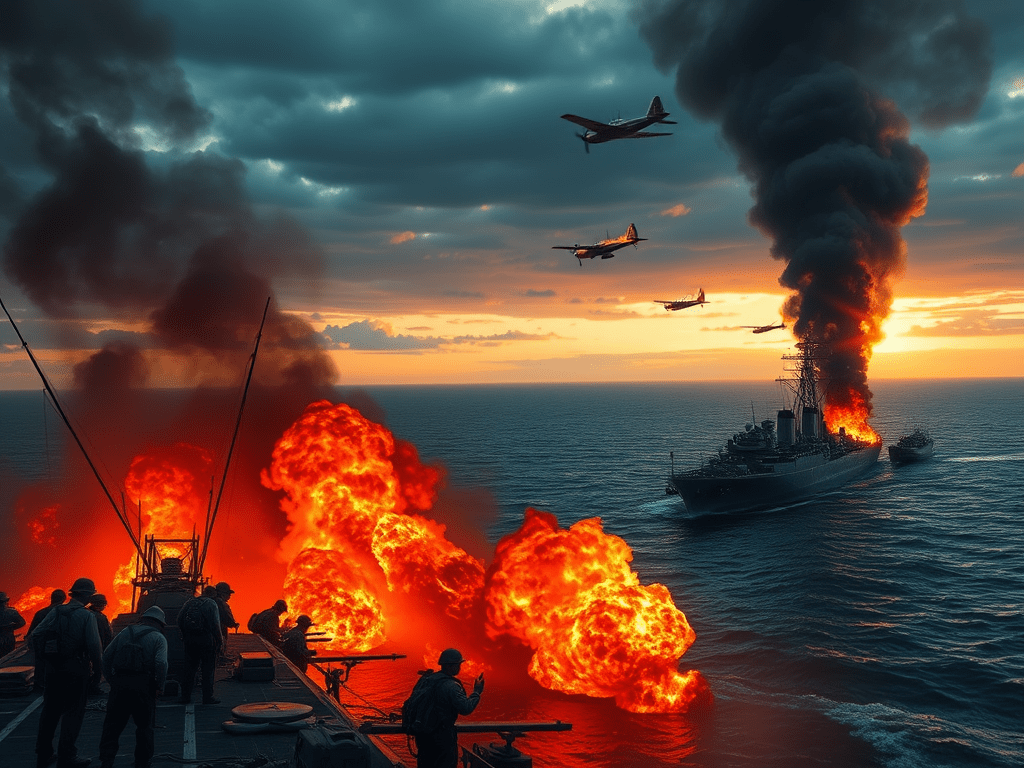
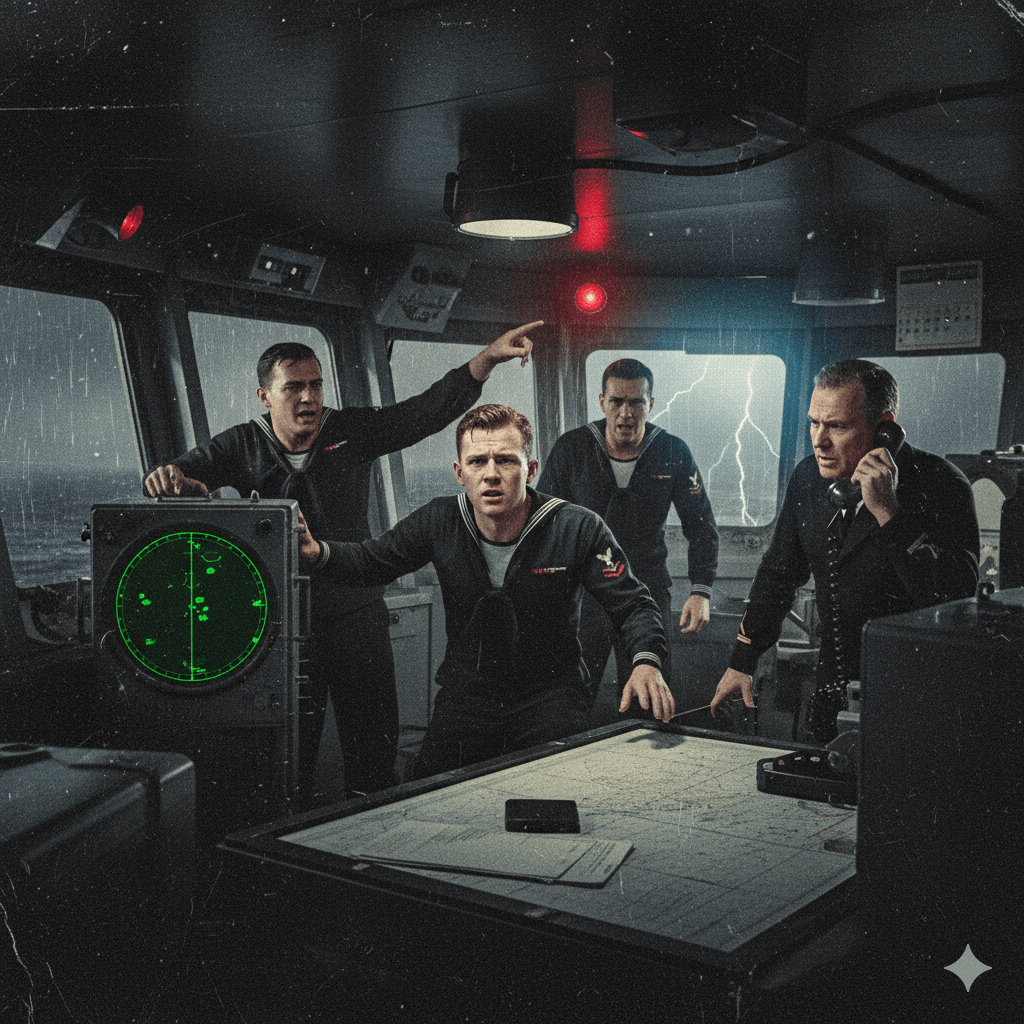
On the night of July 29, the submarine’s periscope spotted the silhouette of the Indianapolis. Hashimoto gave the order to fire a spread of six torpedoes. Within minutes, two struck the ship, ripping through its hull with catastrophic force.
The explosion jolted the crew from their bunks. Chaos erupted as sailors scrambled to abandon ship. The Indianapolis sank in just 12 minutes, leaving nearly 900 men floating in shark-infested waters with nothing but life jackets and a few rafts.
Adrift and Defiant
For four harrowing days, the survivors endured dehydration, exposure, and relentless shark attacks. The ocean turned into a nightmare, a display of despair and heroism. Men huddled together, singing songs to keep spirits up, but as the hours turned to days, their numbers dwindled.
Lieutenant Adrian Marks, piloting a PBY Catalina aircraft, spotted the survivors on August 2. ** The sight of hundreds of men floating in the vast blue sea was surreal. Marks immediately began coordinating a rescue operation, landing his seaplane against orders to pull as many men aboard as possible.
The Aftermath
Of the 1,196 men aboard the Indianapolis, only 316 survived. The sinking became one of the worst naval disasters in U.S. history, but the mission they had completed helped bring the war to an end.
Captain McVay was court-martialed for failing to zigzag, a maneuver intended to evade submarines. The decision was controversial, and years later, he was exonerated by a resolution from Congress.
The story of the USS Indianapolis is a testament to courage, sacrifice, and the shadows of war. It remains a haunting chapter in the history of World War II, a tale of heroism and tragedy on the high seas.
*Island located in the Northern Mariana Islands on the South Pacific
** Long range patrol bomber
Sources:
DaveW. (2017, August 24). Surviving the sinking of the USS Indianapolis: The National WWII Museum: New Orleans. The National WWII Museum | New Orleans. https://www.nationalww2museum.org/war/articles/surviving-sinking-uss-indianapolis
National Archives and Records Administration. (n.d.). The sinking of the USS Indianapolis. National Archives and Records Administration.https://prologue.blogs.archives.gov/2020/07/30/the-sinking-of-the-uss-indianapolis/

 History in 5 Minutes or less
Leave a comment