Alright, settle in, because we’re about to dive into a story so wild, so unbelievable, you’d swear it was ripped from the pages of a fantasy novel. But here’s the kicker: it’s all true. We’re talking about a teenage girl, a peasant from a forgotten corner of France, who convinced an entire kingdom, a skeptical king, and battle-hardened soldiers that God had chosen her to save France. She donned armor, led armies, and changed the course of history. Intrigued? You should be.
The Voices Begin
Imagine a quiet village, Domrémy, nestled in the green Lorraine region of France, sometime around 1412. The Hundred Years’ War, a messy, brutal affair between England and France, had been dragging on for generations. France was in a dire state, much of its land occupied by the English and their Burgundian allies, its king, Charles VII, a rather pathetic figure, uncrowned and effectively exiled in his own country. It was into this chaos that Jeanne d’Arc, or Joan of Arc as we know her, was born. She was just a regular kid, learning to sew and spin from her mother, helping her father in the fields. A simple life, far removed from the grand halls of power or the bloody fields of war.
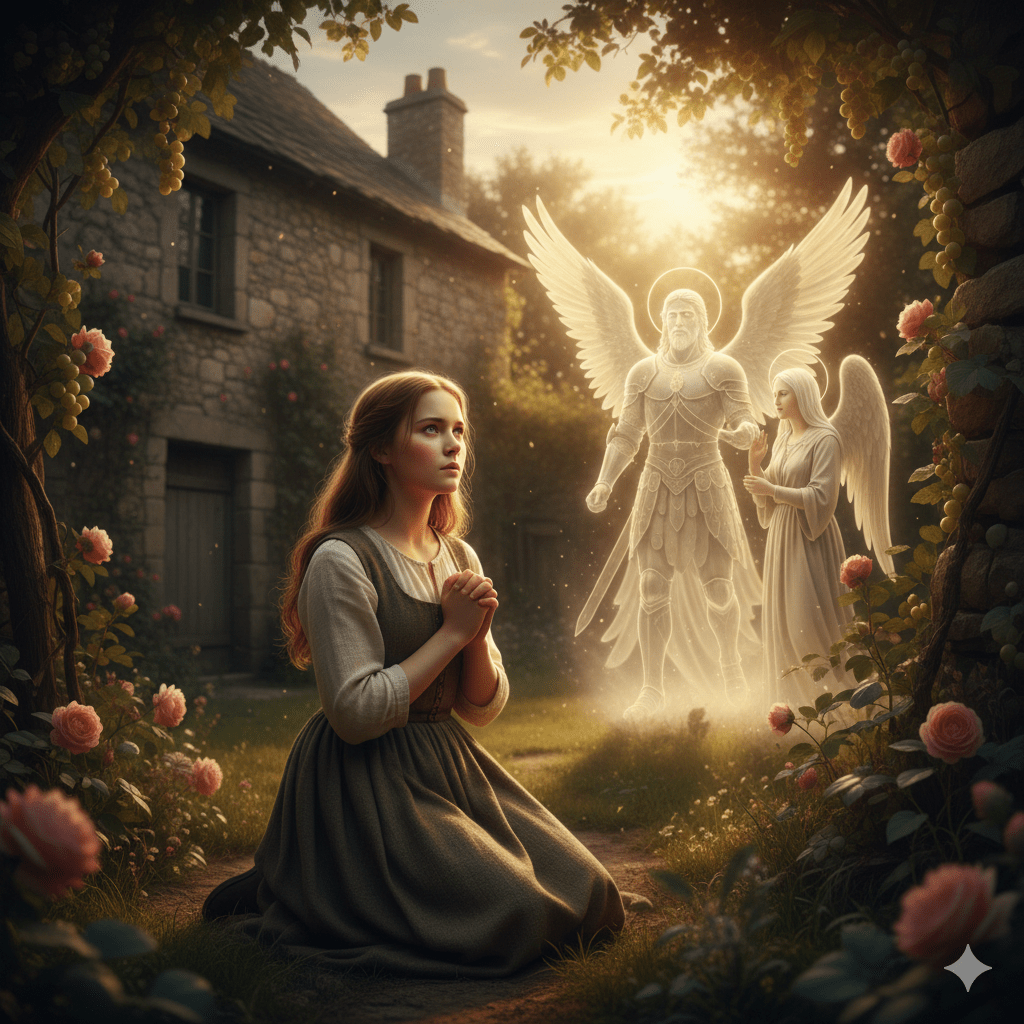
But then, at the tender age of thirteen, something extraordinary happened. She started hearing voices. Not just whispers in the wind, but clear, distinct voices and seeing radiant visions. She claimed they were Saint Michael, Saint Catherine, and Saint Margaret, and their message was unwavering: she was to liberate France from the English and see Charles VII crowned king. Now, let’s be honest, if your thirteen-year-old told you they were getting divine instructions to lead an army, you’d probably schedule an appointment with a specialist. But Joan was unshakeable in her conviction.
The Audacious Journey
For several years, Joan kept her visions mostly to herself, probably trying to figure out how a peasant girl was supposed to, you know, lead an army. But as the situation in France grew more desperate, the voices became more insistent. By 1428, at the age of sixteen, she couldn’t ignore them anymore. Her first step? Convincing Robert de Baudricourt, the local garrison commander, to give her an escort to see Charles VII. Baudricourt, understandably, thought she was either mad or a charlatan. He reportedly told her guardian to “slap her and send her home to her father.”
But Joan was persistent. She made a prophecy about a French military defeat near Orléans (which turned out to be true!), and her unwavering faith and growing local reputation eventually wore Baudricourt down. He gave her a few soldiers and sent her on her way, probably just to get rid of her. Imagine the scene: a teenage girl, dressed in men’s clothes for safety, riding through war-torn France, determined to meet a king she’d never seen, based on voices only she could hear. It’s the stuff of legends.
The King’s Skepticism and the “Secret Sign”
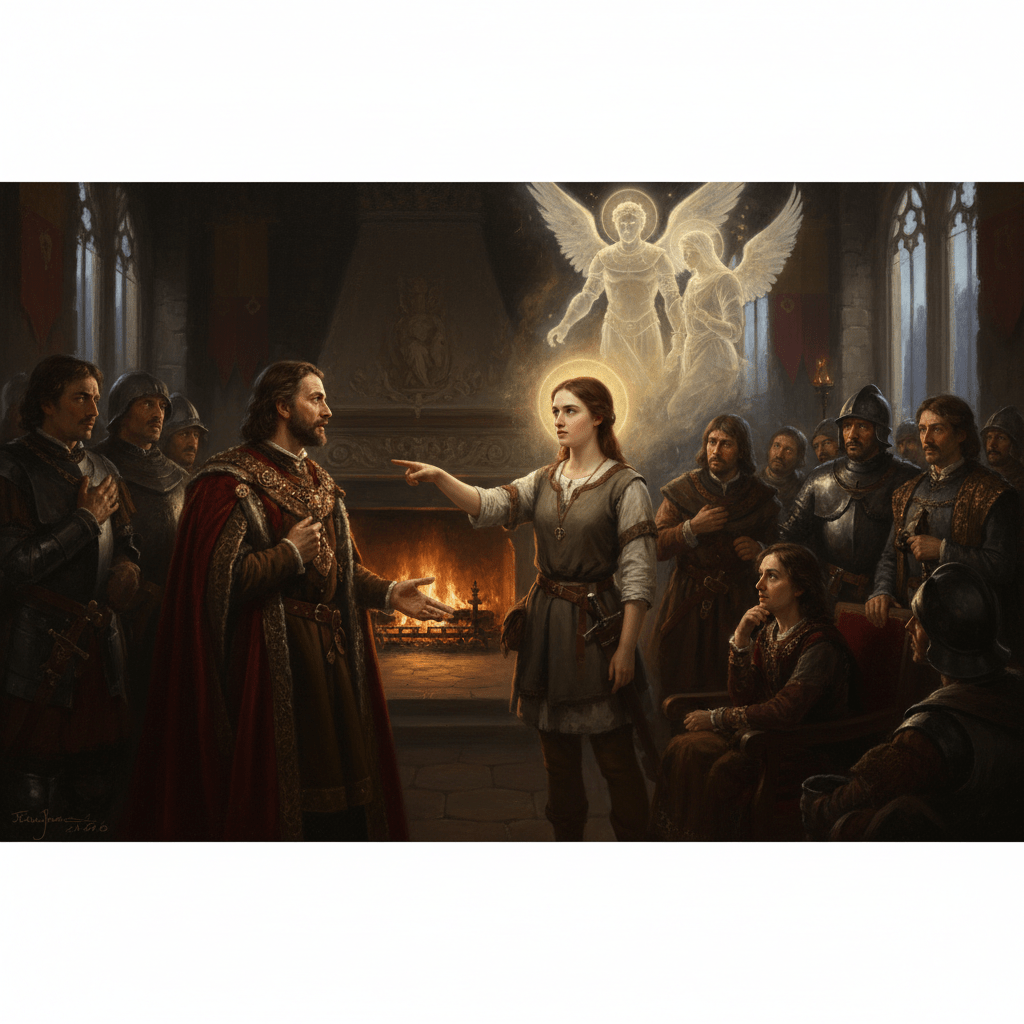
When Joan finally arrived at Chinon, where Charles VII was holed up, the king decided to test her. He disguised himself among his courtiers, but Joan, guided by her voices, immediately identified him. This was her first impressive feat, but Charles, ever cautious, wasn’t fully convinced. He subjected her to rigorous theological examinations by a panel of clerics in Poitiers. They grilled her for weeks, trying to trip her up, to expose her as a witch or a fraud.
But Joan, uneducated as she was, answered with remarkable intelligence and piety. She spoke of her divine mission with such conviction that even the most skeptical theologians were left bewildered. The clinching moment, however, came when she reportedly gave Charles a “secret sign” – a private conversation or revelation that convinced him, finally, that she was indeed sent by God. What that sign was remains a mystery, but it was enough to persuade the wary king to entrust a significant part of his army to this extraordinary young woman.
The Maid of Orléans
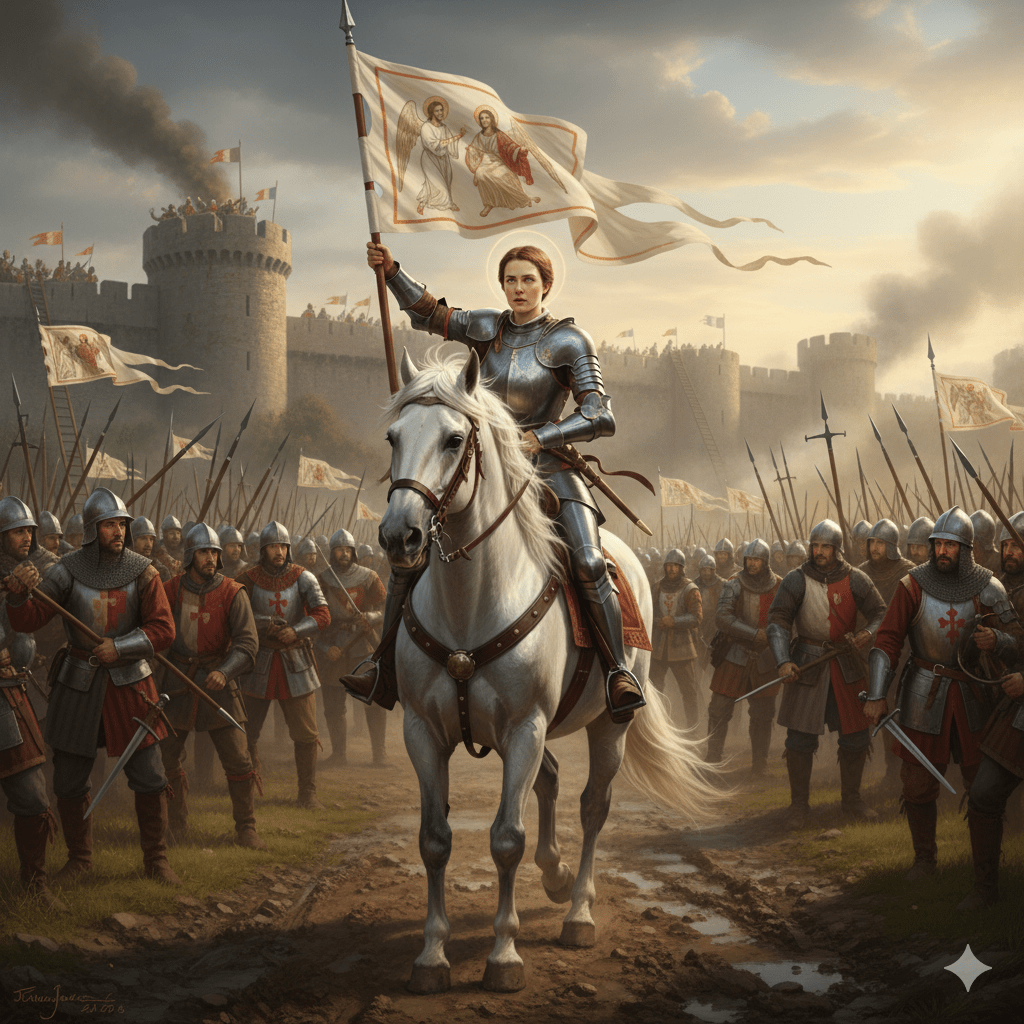
Joan’s first major mission was to relieve the besieged city of Orléans, a strategic stronghold that had been under English siege for months. The French, demoralized and outnumbered, were on the verge of surrender. But with Joan’s arrival in April 1429, everything changed. She didn’t just lead the troops; she inspired them. She carried a banner depicting Jesus and two angels, rather than a sword, and her presence alone seemed to galvanize the weary soldiers. She rode at the head of the army, her simple yet powerful belief in God’s favor infectious.
Within nine days of her arrival, the siege of Orléans was broken. The English, who had seemed invincible, were routed. This victory was nothing short of miraculous, a turning point in the Hundred Years’ War. Joan, now known as the “Maid of Orléans,” became a national hero, a symbol of hope for a downtrodden France. Her fame spread like wildfire, and ordinary people flocked to her, believing she was truly a divine messenger.
The Capture and the Trial
Joan’s momentum seemed unstoppable. After Orléans, she led a series of rapid victories along the Loire Valley, culminating in the Battle of Patay, where the French crushed the English longbowmen. Most importantly, she fulfilled her promise: she escorted Charles VII through enemy territory to Reims, the traditional site of French coronations. On July 17, 1429, Charles was officially crowned King of France with Joan standing proudly by his side.
But the higher you climb, the harder the fall. In May 1430, while defending the town of Compiègne, Joan was pulled from her horse and captured by the Burgundians (French allies of the English). They eventually sold her to the English for 10,000 livres—a king’s ransom.
The English couldn’t just execute her as a prisoner of war; they needed to discredit her. If they could prove she was a witch or a heretic, then Charles VII’s coronation would be seen as the work of the devil, making him an illegitimate king. They put her on trial in Rouen before an ecclesiastical court.
For months, a group of highly educated, male judges grilled a nineteen-year-old girl who couldn’t read or write. They tried to trap her with complex theological questions. When asked if she knew she was in God’s grace, she famously replied:
“If I am not, may God put me there; and if I am, may God so keep me.”
It was a perfect answer. To say “yes” would be heresy (claiming to know the mind of God); to say “no” would be a confession of guilt. Despite her brilliance, the verdict was a foregone conclusion.
The Fire at Rouen
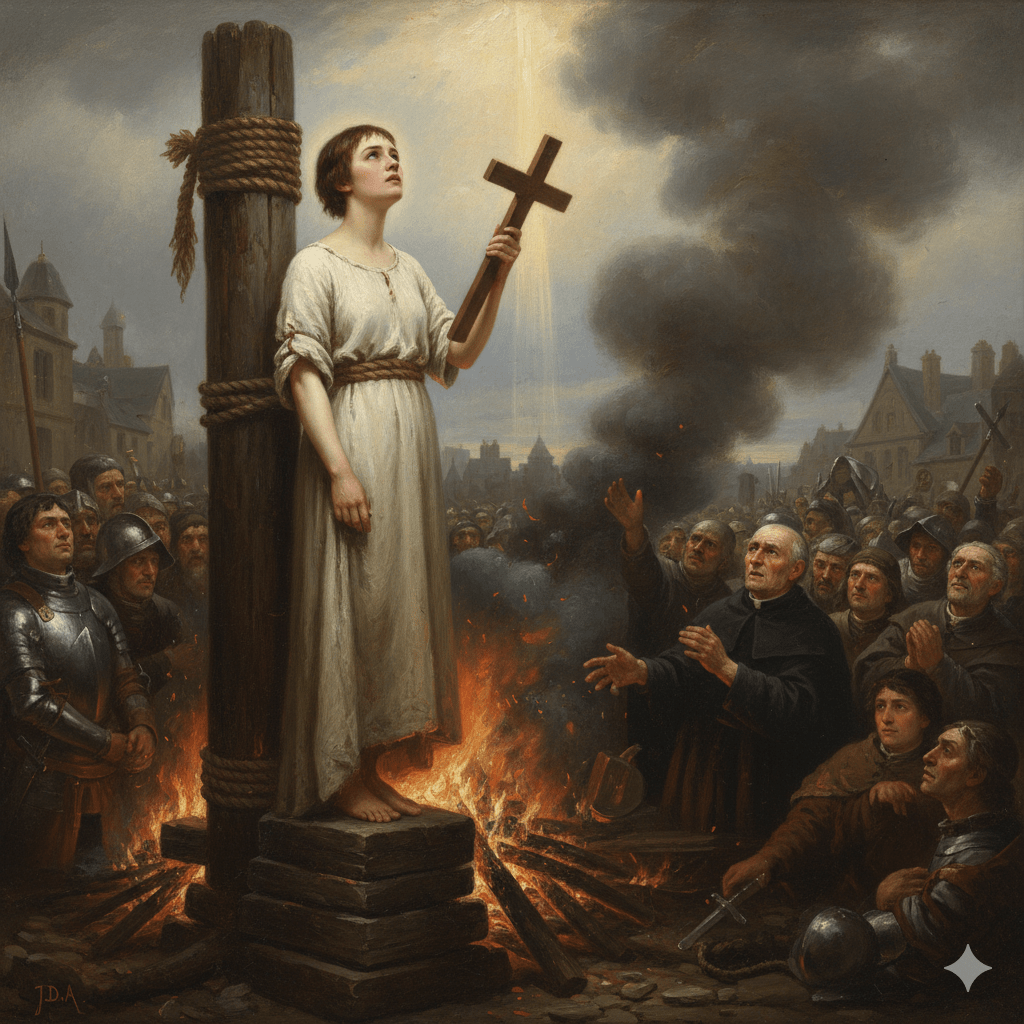
On May 30, 1431, Joan was led to the Old Market Square in Rouen. She was convicted of heresy, primarily on the technicality that she insisted on wearing men’s clothing (which she did to protect herself from assault in prison). She was tied to a tall pillar and burned at the stake.
As the flames rose, she asked for a cross to be held before her eyes and shouted “Jesus!” repeatedly until she fell silent. She was only nineteen years old. Legend says her heart remained unburnt in the ashes, a final “stubborn” sign of her purity.
Twenty-five years later, a retrial ordered by Pope Callixtus III examined the evidence and declared her innocent, a martyr for the faith. In 1920, nearly 500 years after her death, she was officially canonized as Saint Joan of Arc.
Why This Still Matters
Joan of Arc isn’t just a figure from a dusty history book; she is a timeless symbol of conviction against all odds. Here is why her story still resonates today:
- The Power of the Outsider: Joan proved that you don’t need a pedigree, a degree, or a seat at the table to change the world. She was a peasant girl in a world of dukes and bishops, yet she led them all.
- Identity and Agency: Long before modern discussions of gender, Joan challenged the social norms of her era. She chose her own clothes, her own mission, and her own destiny, refusing to let society’s “rules” for women dictate her limits.
- The Human Spirit: Whether you believe her voices were divine or a psychological phenomenon, her courage was undeniable. She faced death with the same bravery she showed on the battlefield.
- National Identity: She is credited with sparking a sense of “Frenchness” that moved the country away from feudal lords and toward a unified nation.
Sources
- Castor, Helen. Joan of Arc: A History. HarperCollins, 2015.
- Pernoud, Régine. Joan of Arc: Her Story. St. Martin’s Press, 1999.
- The Trial of Joan of Arc. Translated by W.P. Barrett. (Primary source transcripts of the 1431 trial).





Leave a Reply