
How America Slid into the Quagmire
By the early 1960s, Vietnam was no longer just a faraway conflict—it had become a litmus test for Cold War ideology. After the French colonial power withdrew in 1954, Vietnam was split into North and South. The communist North, led by Ho Chi Minh, aimed to reunify the country. The South, under President Ngo Dinh Diem and later others, was propped up by the U.S., which feared the spread of communism throughout Southeast Asia. This was the infamous “domino theory”—if one country fell to communism, neighboring nations would follow.
Initially, the American presence in Vietnam was limited to military advisors. But as South Vietnam struggled with political instability and insurgency from the Viet Cong, the U.S. began ramping up its involvement. After the controversial Gulf of Tonkin incident in 1964, where U.S. ships were allegedly attacked by North Vietnamese forces, President Lyndon B. Johnson received congressional approval to escalate American military efforts.
By 1965, more than 180,000 U.S. troops were in Vietnam. Johnson had launched Operation Rolling Thunder, a sustained bombing campaign over North Vietnam, and introduced ground combat units to secure American airbases. Among the new arrivals was the 1st Cavalry Division (Airmobile)—a revolutionary force trained to use helicopters to rapidly insert troops into battle. Their debut engagement would become the first major American battle of the Vietnam War, and one of its bloodiest.
Into the Valley of Death
The Ia Drang Valley in Pleiku Province, in the Central Highlands of South Vietnam, was a rugged, densely forested region near the Cambodian border. Intelligence had reported North Vietnamese Army (NVA) units operating there in strength, likely using Cambodia as a sanctuary. In response, the 1st Cavalry Division was ordered to conduct search-and-destroy missions in the area.
On November 14, 1965, Lt. Col. Harold “Hal” Moore, commanding officer of 1st Battalion, 7th Cavalry Regiment, led his men into an area designated Landing Zone X-Ray, located at the base of the Chu Pong Massif, a mountain that extended into Cambodia. What Moore didn’t know was that he had dropped his 450-man battalion into the immediate vicinity of two full NVA regiments—over 2,000 seasoned troops.
As American helicopters touched down and unloaded troops, the NVA attacked swiftly. Within minutes, the landing zone was surrounded, and a fierce firefight erupted. What began as a reconnaissance-in-force quickly escalated into an all-out battle for survival.
Three Days in the Meat Grinder
The fighting at LZ X-Ray would last for three brutal days—November 14 to 16—and become a test of the new airmobile doctrine. American helicopters played a crucial role in ferrying reinforcements, ammunition, and evacuating the wounded, but their vulnerability under fire became immediately apparent. Landing under NVA mortar and machine gun fire turned every approach into a gauntlet.
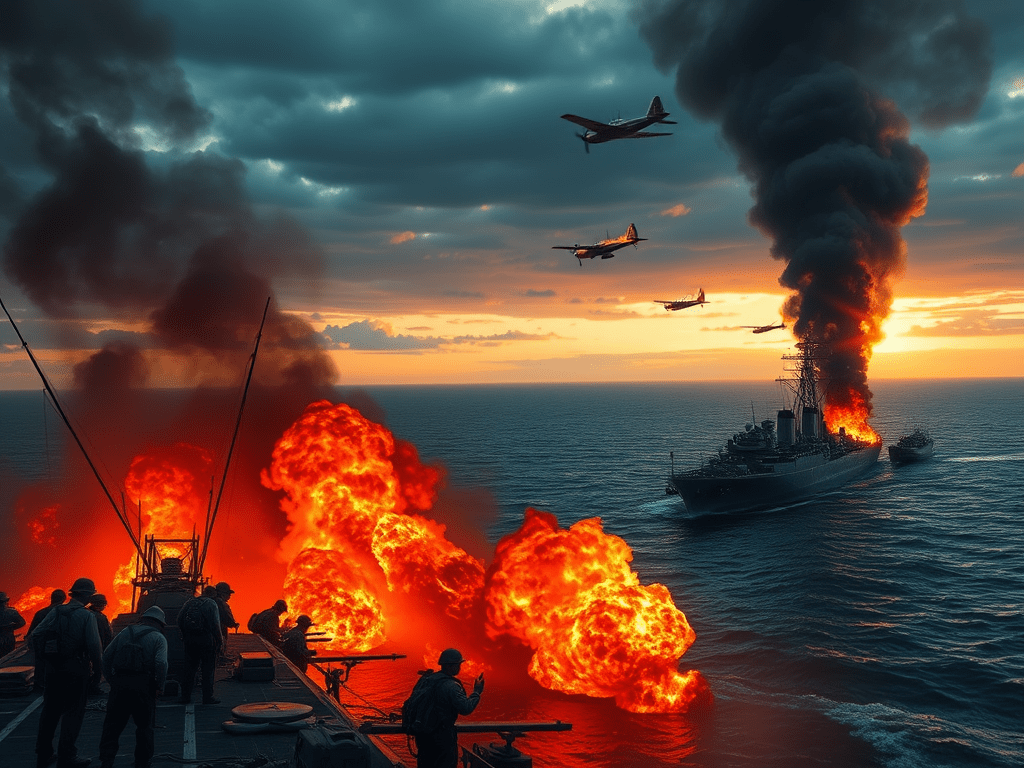
The terrain was both a curse and a blessing. Dense jungle limited visibility, making it difficult for either side to coordinate large-scale maneuvers. Still, the Americans used their superior firepower—particularly artillery and air support—to devastating effect. F-100 fighter-bombers, AC-47 “Spooky” gunships, and B-52 strategic bombers pounded suspected enemy positions. In a tactic known as “danger close,” artillery was sometimes called in just yards from American lines.
Moore, a West Point graduate and deeply respected leader, moved constantly across the battlefield, issuing orders and encouraging his men. His cool-headed leadership was matched by his crusty sergeant major, Basil Plumley, a veteran of World War II and Korea. Plumley’s gruff demeanor and utter fearlessness were legendary—when a young soldier asked if it was true Plumley had made four combat jumps in World War II, he replied, “Five. Three in Europe, one in Korea, one here. And don’t you forget it.”
American troops endured wave after wave of NVA assaults. Many soldiers ran low on ammunition and had to scavenge from the fallen. Some positions were overrun and retaken multiple times. Hand-to-hand combat broke out in the brush. The new M16 rifles, which had not yet been field-tested under combat conditions, often jammed due to dust and carbon buildup, causing panic among troops relying on them in close firefights.
By the early morning of November 16, the NVA began to pull back. Moore’s battalion had held the field, but at a steep cost: 79 Americans killed, 121 wounded. NVA casualties were estimated at over 600 killed. Though outnumbered nearly 5 to 1, the Americans had withstood the onslaught thanks to discipline, leadership, and firepower.
A Bloody Sequel at LZ Albany
Just as the men at X-Ray were beginning to process the horror they had survived, a new nightmare unfolded a few miles away.
Lt. Col. Robert McDade’s 2nd Battalion, 7th Cavalry was ordered to march from LZ X-Ray to a new extraction point—Landing Zone Albany—on November 17. Exhausted from days of fighting, the men moved in a long column through the jungle, with limited reconnaissance and poor coordination.
It was the perfect setup for an ambush.
Just after noon, as the lead companies approached the landing zone, they were caught in an L-shaped ambush by NVA forces who had followed them from Chu Pong. The surprise was total. Machine guns and mortars raked the column. Chaos erupted. Officers were among the first to fall, and without orders or clear communication, the battalion fragmented.
Over the next several hours, some companies managed to form defensive perimeters and fight back, but others were completely overrun. Medics performed battlefield surgery with no supplies. Men used the dead for cover. Some soldiers pretended to be dead for hours, lying motionless while NVA troops executed the wounded around them.
It took until the following day for reinforcements to arrive and secure the area. The final toll at LZ Albany was staggering: 155 Americans killed, and more than 120 wounded—making it the deadliest single-day loss for American troops in the entire Vietnam War.
The Aftermath: A Glimpse of What Was to Come
In strictly military terms, the Battle of Ia Drang was presented as a U.S. victory. The enemy had suffered massive casualties and failed to overrun the American positions. But the strategic consequences were far murkier.
North Vietnamese commanders, including General Vo Nguyen Giap, studied the battle closely. They recognized that engaging in open, large-scale battles with U.S. forces often resulted in devastating losses. Instead, they embraced guerrilla tactics: close-quarters combat, ambushes, and hit-and-run operations that negated American firepower and air superiority.
The Americans, by contrast, misread the battle’s implications. High enemy body counts were taken as signs of progress, leading to the flawed search-and-destroy strategy that would dominate the war in the years to come. American units were sent into the jungle to engage and eliminate the enemy, but with no clear territorial objectives or long-term strategy, much of the war became a deadly loop of patrols, firefights, and helicopters flying home with body bags.
Ia Drang also marked the beginning of a new kind of warfare—one in which high-tech firepower met the unyielding determination of an enemy willing to suffer tremendous losses for the cause of national unification.
Legacy and Lessons
The Battle of Ia Drang was immortalized in the 1992 book We Were Soldiers Once… and Young, co-authored by Hal Moore and journalist Joseph L. Galloway, who had been embedded with the 1st Battalion at LZ X-Ray. Galloway was the only civilian awarded a Bronze Star for valor in Vietnam, after he carried wounded soldiers to safety during the battle.
Their story was later adapted into the 2002 film “We Were Soldiers,” starring Mel Gibson as Moore. The movie brought renewed attention to the battle, highlighting not only the heroism and sacrifice of the soldiers but also the bond between leaders and the led.
To this day, Ia Drang stands as a case study in leadership under fire, the brutality of war, and the perils of misinterpreting military success for strategic progress.
For the U.S., the battle foreshadowed the long, grinding war to come—a war with no front lines, elusive enemies, and a heavy cost paid by soldiers on the ground. For North Vietnam, it was a validation: with patience, cunning, and unbreakable will, even a superpower could be worn down.
Sources & Further Reading:
- We Were Soldiers Once… and Young by Harold G. Moore and Joseph L. Galloway
- Vietnam: A History by Stanley Karnow
- National Archives & Records
- Interviews with survivors and official U.S. Army after-action reports
📬 Enjoyed this deep dive? Subscribe to the blog for more gripping, untold stories from history’s front lines.
📷 Interested in visual breakdowns of famous battles? Drop a comment and let me know what you’d like to see next!
 History in 5 Minutes or less
Leave a comment