
Introduction: A Caribbean Chessboard
In April 1961, the white sands and turquoise waters of Cuba’s southern coast became the stage for one of the most audacious — and disastrous — covert operations in American history: the Bay of Pigs Invasion. Meant to be a swift and surgical strike to overthrow Fidel Castro’s communist regime, it instead became a global embarrassment for the young U.S. President John F. Kennedy. Backed by the CIA, the plan relied on a group of Cuban exiles, a dose of Cold War bravado, and a colossal underestimation of Castro’s forces.
The story of the Bay of Pigs is not just about a failed invasion. It’s about ideology, ambition, espionage, and the stark lesson that even superpowers can miscalculate — with lasting consequences.
Roots of Revolution: Castro and the Cold War
To understand why the U.S. became obsessed with toppling Fidel Castro, one must first look back to 1959, when the Cuban Revolution brought the bearded guerrilla leader to power. Overthrowing the U.S.-backed dictator Fulgencio Batista, Castro was initially seen by some in the West as a liberator. But that quickly changed.
Within months, Castro nationalized industries (many U.S.-owned), aligned with the Soviet Union, and invited KGB advisors into Havana. To Washington, Cuba was no longer a rebellious island — it was now a communist outpost just 90 miles from Florida. The Cold War, already heated in Berlin and Korea, had arrived in the Caribbean.
President Dwight D. Eisenhower approved a plan to remove Castro, authorizing the CIA to train and support anti-Castro Cuban exiles. This plan was inherited — and ultimately executed — by his successor, John F. Kennedy.
Operation Zapata: The CIA’s Secret Plan
Under the codename Operation Zapata, the CIA’s blueprint for invasion was both bold and deeply flawed. The idea was to land a brigade of trained Cuban exiles on the southern coast of Cuba, spark a popular uprising against Castro, and install a friendly government in Havana. The landing site was Bahía de Cochinos — the Bay of Pigs.
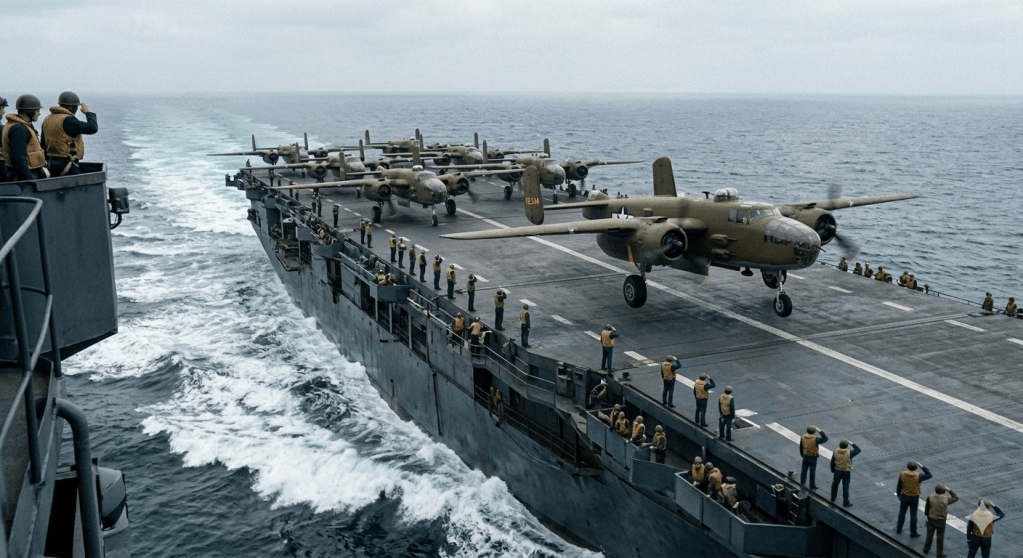
The CIA recruited and trained approximately 1,400 Cuban exiles, many of whom had fled Castro’s regime. These men, called Brigade 2506, were equipped with American weapons, trained in Guatemala, and supported by B-26 bombers painted to look like defecting Cuban planes.
Officials believed that once the brigade landed, the Cuban people would rise up to join them. What they failed to grasp was that Castro, though authoritarian, had widespread support — especially for standing up to the United States.
A Young President, a Difficult Choice
When John F. Kennedy entered the Oval Office in January 1961, the plan to invade Cuba was already in motion. The 43-year-old president, inexperienced in foreign affairs, faced a difficult decision. Abandon the operation and appear weak? Or go through with it and risk war?
Kennedy chose to proceed — but with limitations. He reduced the scale of U.S. air support and insisted on plausible deniability. The invasion had to appear as a Cuban exile uprising, not an American assault. These changes, meant to mask U.S. involvement, would prove disastrous.
The Invasion Begins: April 17, 1961
In the early hours of April 17, Brigade 2506 landed at Playa Girón and Playa Larga, remote beaches flanking the Bay of Pigs. Almost immediately, things went wrong.
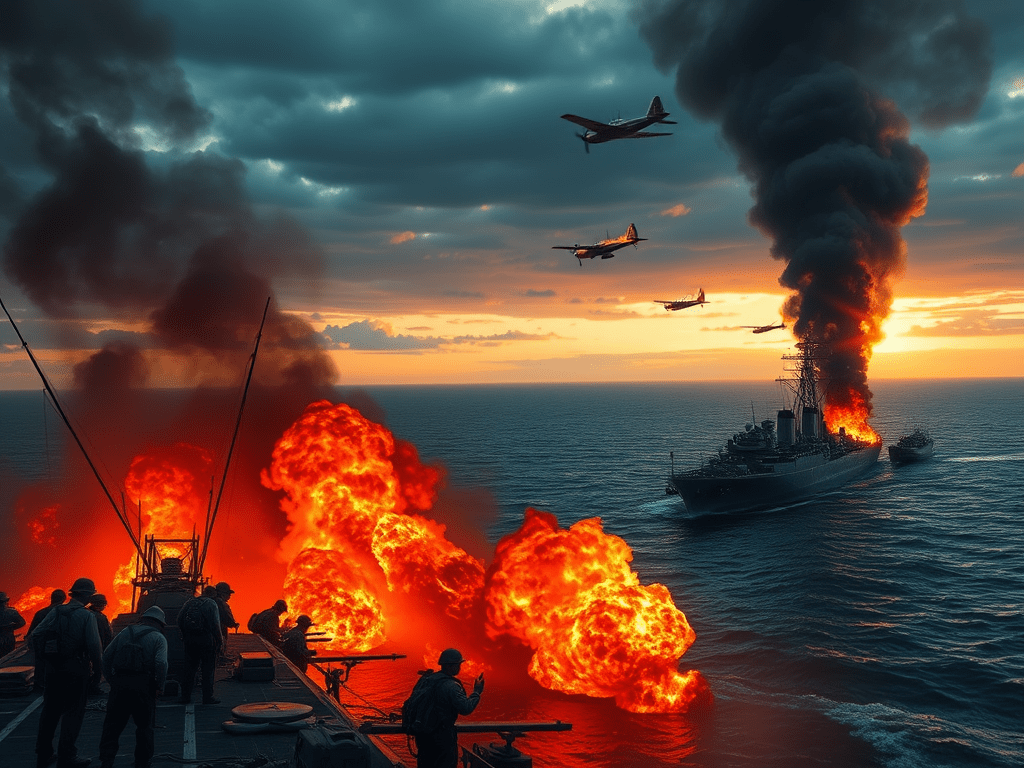
Cuban planes sank exile supply ships, leaving the brigade stranded without ammunition. Coral reefs damaged landing craft. The element of surprise was lost after an earlier airstrike failed to destroy Castro’s air force.
Worse, the Cuban military, led by Castro himself, responded with swift brutality. Over 20,000 troops mobilized, supported by tanks and artillery. The hoped-for uprising among the Cuban people never materialized.
Fighting continued for three days, but the outcome was never in doubt. Kennedy, fearing Soviet retaliation or full-scale war, refused to authorize additional air support. By April 20, most of the exiles were either killed or captured.
Aftermath: A Humiliation on the World Stage
The Bay of Pigs was a public and political catastrophe. The operation had been sold to Kennedy as a low-risk endeavor. Instead, it revealed U.S. overreach and incompetence. Photographs of captured exiles and wrecked American aircraft made headlines around the world.
Kennedy took full responsibility in a press conference:
“There’s an old saying that victory has a hundred fathers and defeat is an orphan. I am the responsible officer of the government.”
Though his approval ratings dipped only temporarily, the damage to U.S. credibility was profound. Allies questioned Washington’s judgment; adversaries saw an opportunity.
For Fidel Castro, it was a triumph. Not only had he defended his revolution, but he had also exposed an American plot to overthrow a sovereign government. His grip on power was cemented, and he became a Cold War icon in the Global South.
Cuba Turns to Moscow: A Soviet Embrace
In the wake of the invasion, Castro declared Cuba a Marxist-Leninist state and turned fully to the Soviet Union for military and economic support. Soviet Premier Nikita Khrushchev, impressed by Castro’s defiance, sent weapons, advisors — and eventually, nuclear missiles.
Thus, the Bay of Pigs directly paved the road to the Cuban Missile Crisis of 1962 — the closest the world ever came to nuclear war. If the invasion had succeeded, the missile crisis might never have happened. But failure pushed Cuba further into the Soviet sphere and escalated Cold War tensions.
Reflections: Misjudgment and Lessons Learned
Why did the Bay of Pigs fail so spectacularly? Historians and analysts point to several factors:
- Faulty Intelligence: The CIA overestimated anti-Castro sentiment in Cuba and underestimated his military strength.
- Political Constraints: Kennedy’s insistence on secrecy and deniability prevented full air cover, dooming the invasion.
- Poor Planning: The landing site was remote, swampy, and far from any major city. Supply lines were vulnerable, and the exiles had no clear path to Havana.
After the debacle, Kennedy reshaped his approach to foreign policy. He became more skeptical of military advice, restructured the CIA, and pursued more diplomatic solutions in future crises — notably during the Cuban Missile Crisis, when he resisted military pressure to bomb Cuba.
Conclusion: A Turning Point in U.S.-Cuban History
The Bay of Pigs Invasion remains a defining moment of the Cold War. It was a tale of hubris, ideology, and the real-world consequences of flawed assumptions. For Kennedy, it was a trial by fire — a failure that helped forge the caution and resolve he would later show during the nuclear standoff with Khrushchev.
For Castro, it was vindication. He had stared down the most powerful nation on earth — and won. The invasion not only secured his rule but also reshaped the geopolitical landscape of the Western Hemisphere.
More than six decades later, the Bay of Pigs serves as a sobering reminder of the limits of power and the importance of understanding a nation’s people, culture, and politics — before attempting to rewrite its future.
Sources:
- Kornbluh, Peter. Bay of Pigs Declassified: The Secret CIA Report on the Invasion of Cuba. The New Press, 1998.
- Rasenberger, Jim. The Brilliant Disaster: JFK, Castro, and America’s Doomed Invasion of Cuba’s Bay of Pigs. Scribner, 2011.
- CIA Historical Review Program. The Official History of the Bay of Pigs Operation. 1996 (declassified).
- Kennedy, John F. Press Conference, April 21, 1961. John F. Kennedy Presidential Library.
- Gleijeses, Piero. Conflicting Missions: Havana, Washington, and Africa, 1959–1976. University of North Carolina Press, 2002.
 History in 5 Minutes or less
Leave a comment