
A Pass Into Legend
The year was 480 BCE. The Persian Empire, the largest and most powerful in the known world, stretched from the Indus River to the Aegean Sea. Its ruler, King Xerxes I, sought to crush the rebellious Greek city-states once and for all. To do this, he launched one of the largest military campaigns in history.
As this colossal force advanced, the Greeks turned to an unlikely location to resist the invasion—a narrow pass through the mountains called Thermopylae, or “the Hot Gates.” There, amidst cliffs and sulfurous springs, the fate of Greece—and perhaps of Western civilization—hung in the balance.
What happened over the next three days would become one of the most iconic moments in military history: a desperate stand by 300 Spartans and their allies against an army that vastly outnumbered them.
The Road to Thermopylae
The seeds of the Persian invasion were planted a decade earlier, in 490 BCE, when the Greeks had defied Persian expansion and defeated King Darius at the Battle of Marathon. Humiliated, Darius vowed revenge but died before he could act. His son, Xerxes I, inherited the throne and his father’s obsession.
Xerxes spent years amassing an army and navy unlike any seen before. Herodotus claimed the land force numbered over two million, though most historians today estimate between 100,000 and 300,000—still a staggering number.
In response, the Greek city-states, often bitter rivals, formed a rare alliance called the Hellenic League. Under the threat of annihilation, they agreed on a two-pronged defense: a land force to stall the Persians at Thermopylae and a naval fleet to hold them off at the nearby straits of Artemisium.
Among the Greek warriors who answered the call were 300 elite Spartans, personally chosen by King Leonidas. These were not ordinary soldiers; they were seasoned warriors with living sons, selected to ensure the continuity of their families after the battle they were unlikely to survive.
Why Thermopylae?
The Spartans were master strategists, and they chose Thermopylae for its unique topography. The pass was a bottleneck where mountains pressed close to the sea. At its narrowest point, only a few dozen men could march side by side. In such tight quarters, the size of the Persian army would count for little.
Here, the Greek phalanx formation could reign supreme. Soldiers locked shields and braced long spears, forming an unbreakable wall of bronze and discipline. In open terrain, the Persians could outmaneuver them. In the pass, that advantage vanished.
This was not just a battle of strength—it was a battle of planning. The Greeks hoped to delay the Persians long enough for the rest of Greece to mobilize. Every hour bought at Thermopylae was another chance to prepare for the battles to come.
Xerxes’ Ultimatum
Before launching his assault, Xerxes attempted diplomacy. He sent messengers to offer the Greeks terms: surrender your weapons and pay tribute, and you will be spared. Many cities capitulated, but not Sparta.
Leonidas’ reply was brief and defiant: “Molon labe”—“Come and take them.”
Xerxes, enraged but intrigued by the Greek defiance, launched a psychological campaign. One envoy warned the Spartans that the Persian archers were so numerous their arrows would blot out the sun. A Spartan named Dienekes replied with biting humor: “Then we shall fight in the shade.”
These weren’t just warriors—they were iron-willed ideologues, ready to die for the laws and freedom of their people.
Three Days of Glory
The Persians struck on the first day, confident of a swift victory. Wave after wave of conscripts, light infantry, and archers surged into the pass. But the Greek line did not break. Spartan discipline, forged through years of brutal training, proved too strong.
Their spears lashed out with surgical precision. The Persians fell in heaps, unable to breach the wall of shields. Even Xerxes’ elite troops, the Immortals, so named because their number was always kept at 10,000, were driven back in bloody disarray.
On the second day, Xerxes redoubled his efforts. The sea beside the pass churned with Persian ships, and the mountain echoed with battle cries. Still, the Greeks held firm, using rotating formations to keep their front-line warriors fresh. The Persians gained no ground.
Xerxes began to doubt. How could so few resist so many?
Ephialtes’ Treason
As Xerxes fumed, fate turned in his favor—not through force, but betrayal.
A local Greek named Ephialtes approached the Persian camp. He revealed a hidden mountain trail that bypassed Thermopylae and allowed the Persians to flank the defenders. Xerxes seized the opportunity and dispatched troops to encircle the Greeks under cover of night.
At dawn on the third day, Leonidas learned of the betrayal. He summoned his allies and made a fateful decision: he would not retreat. Instead, he ordered most of the Greek army to withdraw. But the 300 Spartans, along with 700 Thespians and 400 Thebans, chose to stay.
They would die, but their death would resonate far beyond the battlefield.
The Final Stand
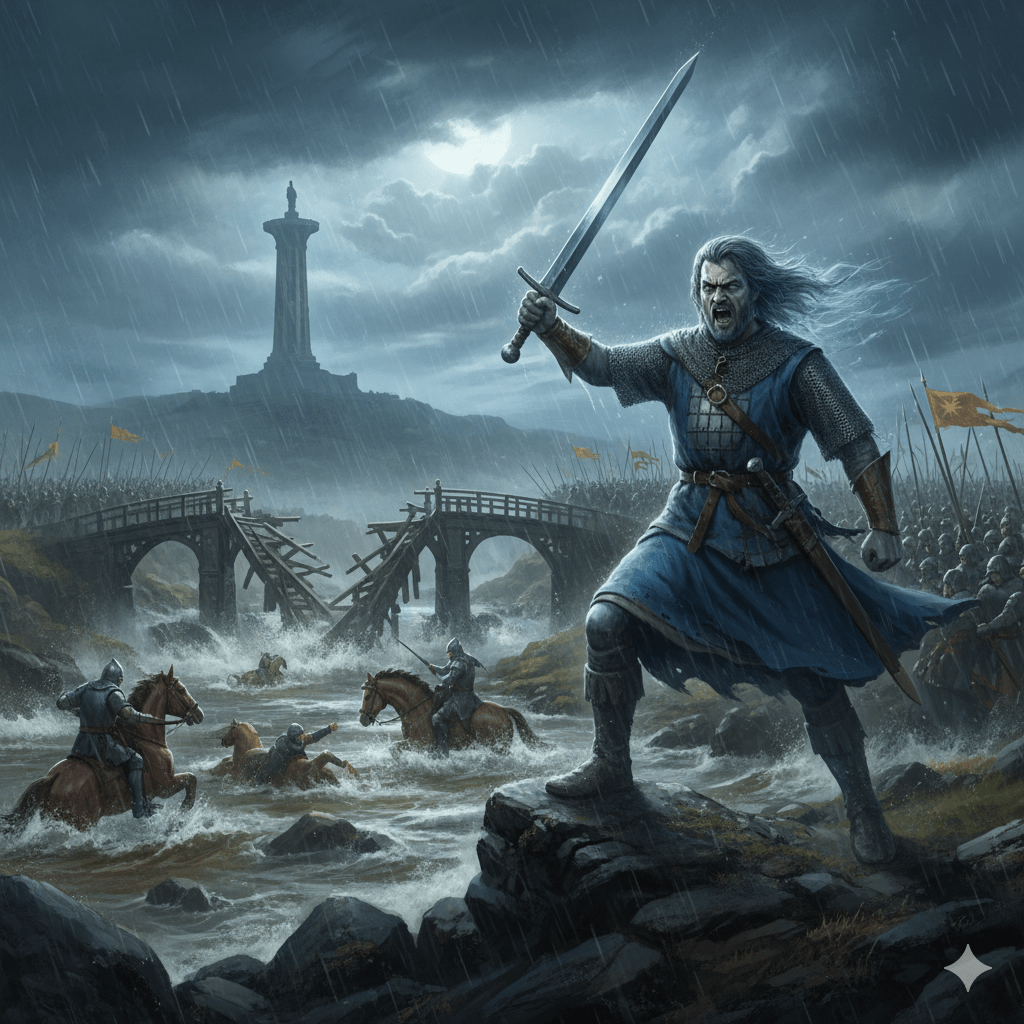
With Persians attacking from front and rear, the defenders broke formation and charged headlong into the enemy. Their long spears splintered. They drew short swords. When those broke, they fought with daggers, fists, and fury.
Leonidas fell early in the day. The Spartans fought desperately to recover his body, pushing back wave after wave in a brutal melee. They were encircled, exhausted, bleeding—but they would not yield.
The Greeks retreated to a small hill near the pass, forming a final defensive circle. Xerxes ordered his archers to fire. Arrows blackened the sky. Herodotus writes they died “to the last man.”
The bodies of Leonidas and his men were mutilated by Persian troops on Xerxes’ orders, a rare act of disrespect, perhaps meant to crush Greek morale.
It didn’t.
The Aftermath and the Spark
Though Thermopylae was a tactical loss, it proved a strategic triumph. News of the Spartans’ sacrifice spread like wildfire. Rather than breaking the Greek spirit, it united it.
Just weeks later, the Greek navy under Themistocles ambushed and decimated the Persian fleet at the Battle of Salamis, turning the tide of the war. The following year, at the Battle of Plataea, Greek forces dealt a final blow that drove the Persians from Europe.
Thermopylae became a rallying cry—a reminder of what courage, unity, and sacrifice could achieve against overwhelming odds.
Fact vs. Myth
The story of Thermopylae has grown in the telling. Herodotus, writing decades after the battle, mixed eyewitness accounts with dramatic flair. Later authors, artists, and filmmakers turned Leonidas into a mythic figure.
The film 300 (2006) depicted the Spartans as near-superhuman warriors. While the truth is less stylized, it is no less compelling. The actual number of defenders was closer to 7,000 at the start, and the 300 Spartans did not fight alone. But their role as the immovable core of the Greek defense is historically sound.
Even Ephialtes, the traitor, is remembered—his name lives on in Greek as a byword for betrayal.
The Legacy of the 300
Today, a marble monument stands at Thermopylae, engraved with the haunting epitaph by Simonides:
“Go tell the Spartans, stranger passing by,
That here, obedient to their laws, we lie.”
The Spartans at Thermopylae did not win—but they did not lose in spirit. Their stand defined heroism. They bought time for Greece, preserved the ideals of freedom and democracy, and reminded the world that valor can blaze brightest in the face of darkness.
Thermopylae lives on—not just in textbooks or films, but in every story of sacrifice for the greater good.
Sources
- Herodotus, The Histories, Book 7
- Plutarch, Sayings of the Spartans
- Cartledge, Paul. Thermopylae: The Battle That Changed the World
- Holland, Tom. Persian Fire: The First World Empire and the Battle for the West
- Lazenby, J.F. The Spartan Army

 History in 5 Minutes or less
Leave a comment