
Few stories in modern history grip the imagination quite like the sinking of the RMS Titanic. Billed as “unsinkable” and celebrated as the pinnacle of early twentieth-century engineering, the Titanic’s tragic fate in the cold waters of the North Atlantic on April 15, 1912, remains one of the most haunting maritime disasters of all time. Beyond the myth, beyond Hollywood, lies a story filled with human ambition, engineering triumphs, overlooked warnings, and profound loss.
A Ship Like No Other
The Titanic was the second of three massive Olympic-class liners built by the White Star Line, designed to dominate the lucrative transatlantic passenger trade. At nearly 882 feet long, weighing over 46,000 tons, and capable of carrying more than 2,200 passengers and crew, she was a floating city.
Luxury was the name of the game. First-class passengers enjoyed lavish suites, opulent dining saloons, a swimming pool, Turkish baths, and even a squash court. The ship’s design emphasized elegance and grandeur, catering to the wealthiest travelers in the world. Yet the Titanic was not only for the elite. Steerage passengers—immigrants seeking a new life in America—were also on board, packed into tighter quarters but still treated better than on many other ships of the era.
The Titanic was a marvel of modern engineering. She featured a double-bottom hull and sixteen watertight compartments designed to keep her afloat even if up to four of them flooded. These innovations led many to believe the ship was practically unsinkable. Newspapers ran with the phrase, and passengers boarded with supreme confidence.
The Maiden Voyage
On April 10, 1912, the Titanic set sail from Southampton, England, bound for New York City. She made stops in Cherbourg, France, and Queenstown (now Cobh), Ireland, before heading west into the Atlantic. On board were some of the wealthiest and most famous people of the time—business magnates like John Jacob Astor IV and Benjamin Guggenheim, socialites like Margaret “Molly” Brown, and industrialists bound for America. But alongside them were more than 700 third-class passengers, many Irish, British, and Eastern European immigrants seeking new opportunities.
The Titanic carried 2,208 people in all—1,317 passengers and 891 crew members. Though her design allowed for more than 3,500, the maiden voyage sailed under capacity.
Captain Edward Smith, an experienced mariner nearing retirement, commanded the vessel. Known for his calm demeanor and spotless record, he was a respected figure in maritime circles. The voyage was to be his last before retiring, making the Titanic’s journey a personal milestone as well.
Warnings at Sea
The Titanic cut through the Atlantic at nearly full speed, averaging 21–22 knots. Wireless operators Jack Phillips and Harold Bride manned the Marconi system, sending and receiving messages for passengers but also handling critical weather updates.
In the days before April 14, the ship received multiple iceberg warnings from other vessels in the North Atlantic shipping lanes. The ice field was unusually heavy that year, the result of a mild winter that sent more icebergs drifting farther south than normal. Ships like the Caronia, the Baltic, and the Amerika warned of large bergs in Titanic’s path.
On April 14, the Titanic received at least six separate warnings. Some made it to the bridge, but others were missed or disregarded. That night, the ship steamed into a known ice field at nearly maximum speed.
The Collision
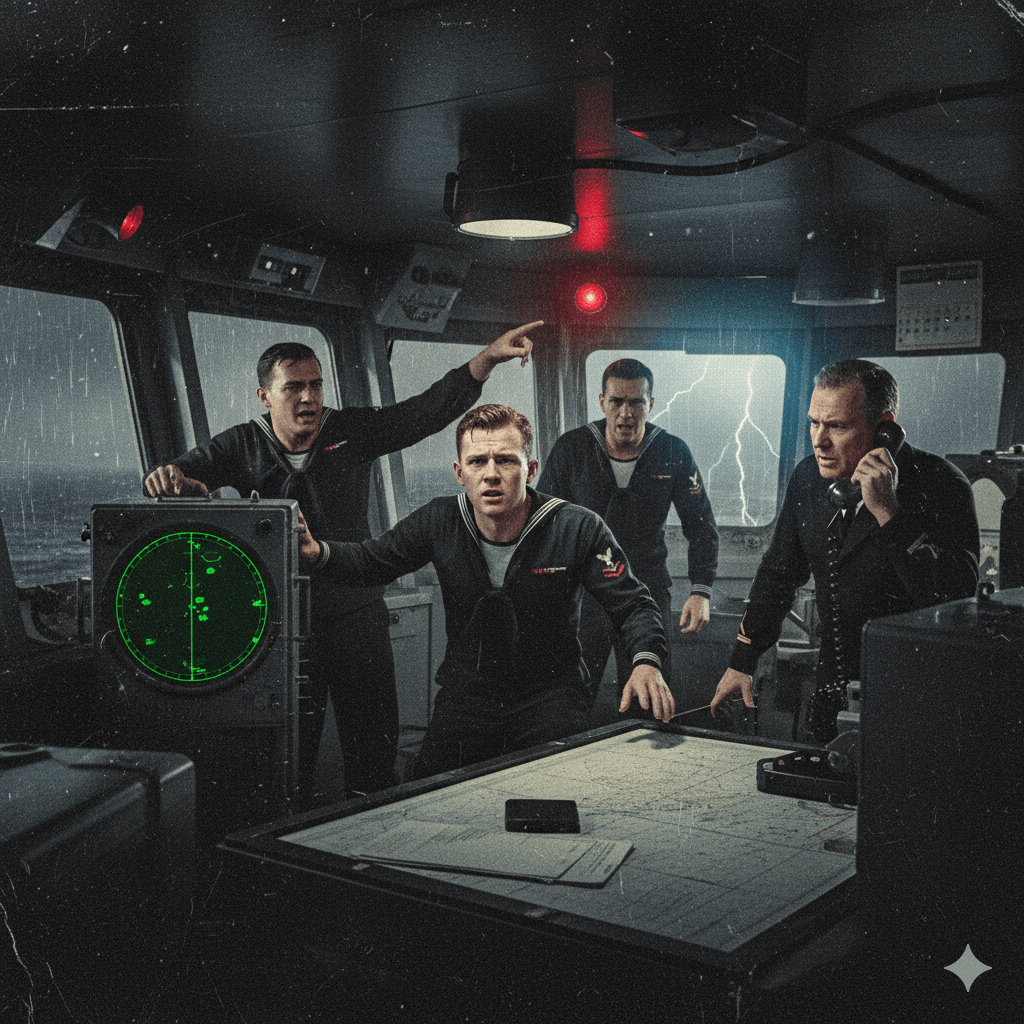
At 11:40 p.m. on April 14, lookout Frederick Fleet, stationed high in the crow’s nest, spotted a massive iceberg directly in Titanic’s path. He rang the warning bell and phoned the bridge: “Iceberg, right ahead!”
First Officer William Murdoch ordered the ship to turn hard to port and engines reversed, but it was too late. At nearly 22 knots, the Titanic could not avoid the collision. The starboard side scraped along the submerged ice, slicing open the hull beneath the waterline.
Contrary to popular belief, the iceberg did not gouge a giant gash. Instead, it buckled the seams along the plates of the ship’s hull, creating a series of openings across six watertight compartments. Titanic’s design could survive flooding in four compartments—but not six. The “unsinkable” ship was doomed.
“Women and Children First”
At first, many passengers were unaware of the severity of the damage. The jolt was mild, and the Titanic appeared stable. But below deck, seawater rushed in at an alarming rate. By midnight, Captain Smith and shipbuilder Thomas Andrews confirmed the inevitable: the Titanic would sink within hours.
The ship carried lifeboats for only 1,178 people—barely half those on board, and just a fraction of her full capacity. This shortfall was the result of outdated maritime regulations that based lifeboat numbers on tonnage rather than passenger count. White Star Line had actually reduced the number of lifeboats to preserve deck space for aesthetics.
Evacuation began slowly. Many passengers resisted leaving the warm, brightly lit ship for the dark, freezing Atlantic. Others, particularly in third class, faced confusion and difficulty navigating barriers and locked gates. Lifeboats were lowered half-full, some with fewer than 20 people despite capacities of 65.
The unwritten rule of “women and children first” guided loading, but its application varied. In first and second class, women and children were largely given priority. In steerage, chaos and language barriers slowed evacuation, with many unable to reach the boats in time.
Heroism and Tragedy
Amid the disaster, stories of bravery unfolded.
- Wallace Hartley and the Band – The ship’s musicians famously played on the deck to calm passengers. Survivors recalled hearing hymns like “Nearer, My God, to Thee” as the ship went down. None of the band members survived.
- Margaret “Molly” Brown – The Denver socialite took charge in Lifeboat No. 6, urging the crew to return for survivors and later using her influence to raise funds for those in need.
- Captain Edward Smith – Witnesses last saw Smith on the bridge, going down with his ship, a gesture of duty and tradition among captains.
- The Wireless Operators – Jack Phillips and Harold Bride worked the radios until power failed, sending out distress calls that brought nearby ships racing to Titanic’s aid. Phillips died; Bride survived.
As the bow sank deeper, the stern lifted high into the air. At 2:18 a.m., the ship broke in two, the stern crashing back before finally slipping beneath the waves at 2:20 a.m. April 15, 1912.
Rescue and Aftermath
In the frigid water, those without lifeboats stood little chance. The sea was barely above freezing, and hypothermia set in within minutes. More than 1,500 people perished that night.
The RMS Carpathia, a Cunard liner, responded to Titanic’s distress calls and steamed at full speed through ice fields, arriving at 4 a.m. By then, the Titanic was gone. Carpathia rescued 705 survivors from the lifeboats and carried them to New York, where the world awaited in shock.
Inquiries followed in both Britain and the United States. Both concluded that the disaster was the result of excessive speed in dangerous waters, insufficient lifeboats, and failures in communication. The tragedy spurred sweeping reforms:
- The International Convention for the Safety of Life at Sea (SOLAS), 1914 – Mandated enough lifeboats for all, 24-hour radio watch, and improved safety drills.
- International Ice Patrol – Established to monitor and warn ships about iceberg dangers in the North Atlantic.
Myths vs. Reality
The Titanic’s sinking has given rise to myths, some popularized by books and films:
- “Unsinkable” – The White Star Line never officially used the term, though it appeared in press coverage. The belief took root more in public imagination than official advertising.
- “The Ship Sank in One Piece” – Survivors reported conflicting accounts, but discovery of the wreck in 1985 confirmed that the ship broke in two before sinking.
- “Steerage Locked Below” – While some gates and barriers slowed third-class passengers, there is no evidence they were deliberately imprisoned. Miscommunication and poor design, however, greatly hindered their escape.
Legacy of the Titanic
The Titanic disaster remains etched in memory not only because of the scale of the loss but because it symbolized the hubris of an age. The early 20th century was a time of technological triumph and optimism, when many believed human progress had no limits. The Titanic’s sinking served as a sobering reminder of nature’s power and the cost of overconfidence.
Artifacts recovered from the wreck—discovered in 1985 by Robert Ballard and Jean-Louis Michel—continue to fascinate millions. Museums, films, books, and exhibitions keep the story alive. Most of all, it is the human stories—of courage, fear, sacrifice, and survival—that endure more than a century later.
Conclusion
The sinking of the Titanic was not merely the result of one mistake but a series of human errors and systemic failings: excessive speed, ignored warnings, inadequate lifeboats, and misplaced faith in technology. Yet in the midst of tragedy, acts of heroism and humanity shone through.
The Titanic continues to capture the imagination not just as a shipwreck, but as a timeless story of ambition, folly, and resilience. More than 110 years later, it reminds us of the fragility of human achievement and the enduring need for vigilance, humility, and compassion.
Sources
- Lord, Walter. A Night to Remember. Holt, 1955.
- Eaton, John P., and Haas, Charles A. Titanic: Triumph and Tragedy. W.W. Norton, 1986.
- Ballard, Robert D. The Discovery of the Titanic. Warner Books, 1987.
- British Board of Trade Inquiry, 1912.
- U.S. Senate Inquiry, 1912.

 History in 5 Minutes or less
Leave a comment