
A Bold Gamble in the New World
In the spring of 1519, Hernán Cortés stood on the sandy shores of Veracruz, Mexico, at the head of roughly 600 Spanish soldiers. Behind them lay the restless waters of the Gulf of Mexico and a fleet of ships that had carried them across the Atlantic. Ahead stretched an unknown world—vast cities, millions of indigenous people, unfamiliar landscapes, and the mighty Aztec Empire.
Legend has it that, upon arrival, Cortés gave an order that would become one of the most dramatic symbols of commitment in military history: “Burn the boats.”
Whether he literally set fire to the vessels or, as some historians argue, merely scuttled and dismantled them, the meaning was the same—retreat was not an option. Cortés and his men would conquer, or they would perish. This decision, both terrifying and inspiring, marked a pivotal turning point not only in the Spanish conquest of the Americas but also in the way leaders throughout history would invoke the idea of total commitment.
Setting the Stage: Spain’s Age of Conquest
By 1519, Spain was riding high as one of Europe’s most powerful kingdoms. Columbus’s voyages had opened the door to the New World, and conquistadors—soldiers, adventurers, and opportunists—were carving out empires and fortunes across the Caribbean.
Cortés himself was not supposed to be leading an independent mission of conquest. Born in Medellín, Spain, in 1485, he had already made a name for himself in Hispaniola and Cuba. When he secured command of an expedition to explore the Mexican mainland, it was against the wishes of Diego Velázquez, the governor of Cuba, who distrusted Cortés’s ambition.
This gave the mission a cloak-and-dagger quality: Cortés’s authority was tenuous, his men’s loyalty uncertain, and his relationship with Spain’s colonial administration precarious at best. For Cortés, the risk of mutiny or desertion loomed large.
Arrival at Veracruz
When the expedition landed on the coast of Mexico in April 1519, Cortés’s men were awestruck. The region was lush, fertile, and dotted with thriving indigenous communities. Yet whispers ran through the camp. Some soldiers wondered aloud whether they should return to Cuba and avoid the uncertainty of marching inland.
The Aztec Empire, they soon learned, was no ragtag collection of villages. At its heart was Tenochtitlán, a glittering island capital larger than any European city of its day. Facing such power with just a few hundred Spaniards was daunting, and fear spread quickly.
It was here, at this critical moment, that Cortés made his fateful decision.
The Famous Order: “Burn the Boats”
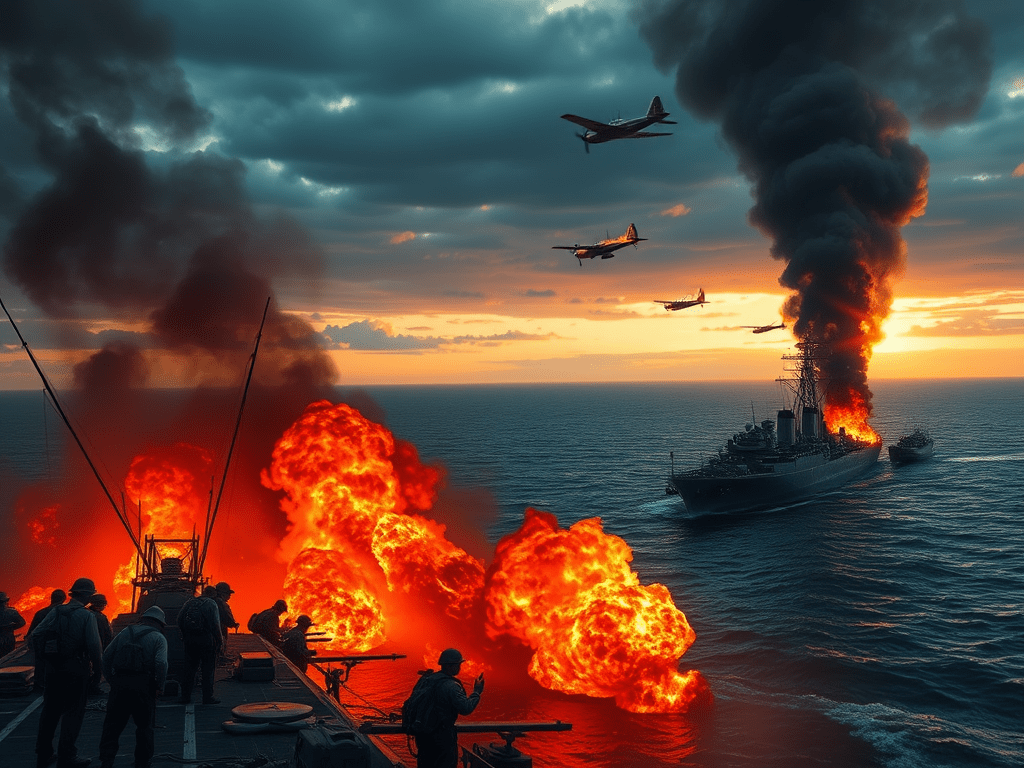
The image is cinematic: Spanish ships crackling in flames, smoke curling against the tropical sky, soldiers watching in disbelief as their only path of retreat disappeared in fire.
But the truth is murkier. Most historians agree Cortés did not literally burn the fleet. Instead, he ordered the ships scuttled, dismantled, and sunk—except for one, which he kept in reserve. According to Bernal Díaz del Castillo, a soldier who chronicled the conquest, Cortés told his men the vessels were unfit for sailing and commanded them stripped for parts.
Regardless of the method, the symbolism was powerful. Cortés made it clear:
- There was no going back to Cuba.
- They would press forward into the Mexican interior.
- Victory was the only path to survival.
In one stroke, Cortés eliminated hesitation and forced unity. His men, who might otherwise have deserted, now had no choice but to follow him.
Why Cortés Took the Risk
From a strategic perspective, the order was genius. Cortés understood human psychology. By removing the option of retreat, he turned doubt into determination. His men, faced with survival or death, rallied behind him with newfound resolve.
It also served a political purpose. Cortés had defied Velázquez by launching this mission. Returning to Cuba risked imprisonment—or worse. By cutting ties to the fleet, Cortés ensured that the conquest of Mexico would be seen as his achievement, not Velázquez’s.
In a sense, Cortés was not just burning ships; he was burning bridges.
March to Tenochtitlán
With no way back, the Spaniards pushed inland. Along the way, Cortés skillfully forged alliances with indigenous peoples who resented Aztec domination. The Totonacs, Tlaxcalans, and others provided troops, supplies, and intelligence that proved decisive.
By November 1519, Cortés and his men marched into Tenochtitlán, where they were welcomed by Emperor Moctezuma II. The Spaniards were astonished by the city’s size, beauty, and wealth—causeways, canals, markets, and palaces that rivaled anything in Europe.
The conquest that followed was brutal, marked by betrayals, massacres, and sieges. By August 1521, after a grueling war, Tenochtitlán fell, and the Aztec Empire crumbled. Out of the ashes, Spain built New Spain, the foundation of modern Mexico.
The act of burning the ships had transformed from a daring gamble into a legend of leadership.
The Legacy of “Burn the Boats”
Cortés’s bold move has outlived him by centuries. Military strategists, business leaders, and motivational speakers all invoke the phrase “burn the boats” as shorthand for absolute commitment. The idea is simple: success requires removing the possibility of retreat.
- In business: Entrepreneurs often cite the story to encourage risk-taking and perseverance.
- In sports: Coaches use the phrase to inspire athletes to give everything they have.
- In self-help culture: It symbolizes eliminating excuses and going all-in on personal goals.
But the romanticized version often overlooks the darker reality. For Cortés, burning the ships meant trapping hundreds of men in a brutal campaign that cost countless indigenous lives and reshaped a continent. It was a stroke of leadership genius—but also a step toward conquest and colonization that brought suffering and upheaval.
Myth Versus History
So, did Cortés actually say, “Burn the boats”? Probably not in those exact words. The dramatized version seems to have evolved later, condensed into a soundbite of history. The reality—scuttling ships under the pretense of them being unseaworthy—was less theatrical but just as effective.
Still, the enduring myth has a power of its own. It transforms a pragmatic act of control into a parable of determination. Like many historical legends, the details matter less than the message.
The Man Behind the Legend
Cortés himself was a complicated figure. Brilliant, ruthless, and ambitious, he embodied the spirit of Spain’s conquests. After Tenochtitlán’s fall, he was made governor and captain general of New Spain but eventually fell from favor with the Spanish Crown. He died in 1547, wealthy but politically sidelined.
To his men, he was both a daring leader and a tyrant. To the indigenous peoples of Mexico, he was a harbinger of destruction. To history, he remains one of the most controversial figures of the age of exploration.
Why This Story Still Resonates
The enduring fascination with Cortés’s “burn the boats” moment speaks to something deeply human: the fear of uncertainty and the longing for resolve. We all face moments when turning back feels safer, yet progress demands commitment.
Cortés’s decision—whether viewed as reckless, brilliant, or cruel—reminds us that history often turns on leaders who take away the escape routes. For his men, it meant forging ahead into the unknown. For us, it’s a metaphor that continues to echo, centuries later.
Sources
- Díaz del Castillo, Bernal. The Conquest of New Spain. Penguin Classics, 1963.
- Prescott, William H. History of the Conquest of Mexico. 1843.
- Restall, Matthew. Seven Myths of the Spanish Conquest. Oxford University Press, 2003.
- Todorov, Tzvetan. The Conquest of America: The Question of the Other. Harper & Row, 1984.
- Mann, Charles C. 1491: New Revelations of the Americas Before Columbus. Vintage, 2006.



 History in 5 Minutes or less
Leave a comment