
When most people in the United States think of Cinco de Mayo, they picture parades, mariachi bands, colorful dresses swirling in dance, and maybe a cold margarita in hand. But behind the chips, salsa, and celebration lies a story of grit, courage, and an underdog victory that still inspires.
Let’s pull back the curtain on history and revisit May 5, 1862, when a ragtag Mexican army stunned the world by defeating Napoleon III’s mighty French forces in the small city of Puebla.
Setting the Stage: Mexico in Turmoil
The 1860s were a chaotic time for Mexico. After decades of instability—wars of independence, invasions by foreign powers, and internal conflicts—the country was nearly bankrupt. In 1861, Mexican President Benito Juárez, a reform-minded leader of Zapotec origin, suspended payments on Mexico’s foreign debts.
That decision infuriated three European powers: France, Britain, and Spain. They sent fleets to Veracruz, Mexico’s main port, to demand repayment. At first, all three threatened intervention, but Britain and Spain eventually backed down after negotiating with Juárez.
France, however, had bigger ambitions.
Napoleon III’s Grand Dream
France was under the rule of Napoleon III, nephew of the famous Napoleon Bonaparte. Unlike Britain and Spain, Napoleon III wasn’t content with collecting debt. He saw Mexico as the perfect place to expand French influence in the Americas.
His plan? Install a European monarch in Mexico, align with the Southern Confederacy in the U.S. Civil War, and build a French-led empire in the Western Hemisphere.
So in late 1861, French forces marched inland from Veracruz toward Mexico City. By spring 1862, they were considered unstoppable—well-trained, well-armed, and confident.
Enter the Underdogs
On the Mexican side, things looked grim. Juárez’s government had a small, poorly equipped army. Many soldiers carried outdated muskets—or no firearms at all, fighting with machetes and farming tools.
The man leading them was General Ignacio Zaragoza, a 33-year-old Texan-born Mexican (yes, he was born in Goliad, Texas, when it was still part of Mexico). Zaragoza was not flashy, but he was disciplined and inspiring.
His army of about 4,000–5,000 troops faced a French force of 6,000–8,000, led by seasoned commander Charles de Lorencez. By all logic, the French should have won easily.
The Road to Puebla
The French targeted Puebla, a city located on the path to Mexico City. If Puebla fell, the road to the capital would be wide open.
Zaragoza and his men rushed to defend the city. They fortified positions around two key hilltop forts: Loreto and Guadalupe. These would become the heart of the Mexican defense.
May 5, 1862: The Battle of Puebla
On that fateful morning, French troops advanced with confidence. They believed they would sweep aside the Mexicans within hours.
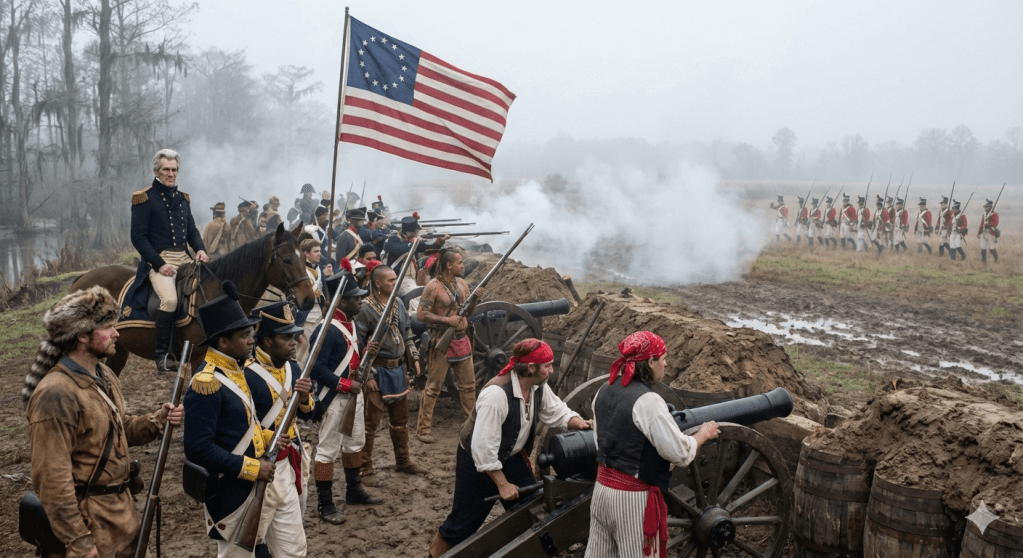
But Zaragoza had a plan. His men held firm behind their defenses. Waves of French soldiers charged uphill toward the forts, only to be met with withering musket fire, cannon blasts, and even stones hurled by local civilians who had joined the fight.
At one point, the French cavalry tried to break the Mexican lines—but the muddy terrain from recent rain bogged them down. Mexican fighters, many of them indigenous peasants, counterattacked with ferocity.
By late afternoon, the French assault had crumbled. Their casualties mounted—about 500 dead compared to fewer than 100 Mexican losses. By sunset, the French commander ordered a retreat.
Against all odds, Mexico had defeated one of the strongest armies in the world.
The Aftermath: A Symbol is Born
The victory at Puebla didn’t end the war. The French regrouped, sent reinforcements, and eventually captured Mexico City in 1863, installing Maximilian of Habsburg as emperor. But that would come later.
In the immediate aftermath, the Battle of Puebla became a symbol of resistance, pride, and unity. For Juárez’s government, it was proof that Mexico could stand up to foreign domination. For ordinary Mexicans, it was a reminder that courage and determination could topple giants.
Cinco de Mayo vs. Mexican Independence Day
Here’s where things get interesting: Cinco de Mayo is not Mexico’s Independence Day.
- Independence Day is celebrated on September 16, marking the 1810 uprising against Spanish rule led by Father Miguel Hidalgo.
- Cinco de Mayo instead commemorates the single battle at Puebla in 1862.
In Mexico, Cinco de Mayo is primarily celebrated in Puebla with parades and reenactments. Across the rest of Mexico, it’s not as big a holiday.
The U.S. Connection: How Cinco de Mayo Crossed the Border
So why is Cinco de Mayo so popular in the United States?
The earliest celebrations were held in California during the 1860s. Mexican immigrants and Californios (Mexican-Americans living in California) saw the Battle of Puebla as a victory for democracy. Remember—the U.S. Civil War was raging at the same time, and many saw Mexico’s resistance as tied to the Union cause against slavery and monarchy.
Over time, the holiday spread among Mexican-American communities as a way to honor heritage, culture, and resilience. By the mid-20th century, it had also become a broader celebration of Mexican identity in the United States.
In the 1980s, beer companies, restaurants, and advertisers helped transform Cinco de Mayo into the large-scale cultural festival we see today—with music, food, and community pride.
Why Puebla Still Matters
The significance of Cinco de Mayo goes far beyond one battlefield:
- It represents the spirit of resistance against imperialism.
- It highlights the contributions of **ordinary people—farmers, villagers, and indigenous fighters—**who stood up against a superpower.
- It serves as a reminder of Mexico’s enduring struggle for sovereignty in the face of foreign intervention.
Even though the French would later occupy Mexico for a few years, their eventual defeat (thanks in part to U.S. pressure after the Civil War) reinforced what Puebla had first shown: Mexico could not be easily conquered.
A Celebration of Culture
Today, Cinco de Mayo is more than just a commemoration of a battle. In the United States especially, it has grown into a celebration of Mexican culture and heritage.
From mariachi performances and folklórico dances to traditional foods like mole poblano (ironically, Puebla’s signature dish), Cinco de Mayo brings people together in joy and pride.
But underneath the fun is a serious story worth remembering—the story of a small army that defied the odds and inspired a nation.
Conclusion: The Underdog’s Triumph
Cinco de Mayo isn’t about margaritas—it’s about resilience. It’s about a young general, an outnumbered army, and a community that came together to defend its homeland.
The Battle of Puebla showed the world that even the most powerful armies can be stopped by determination, courage, and unity. That spirit still resonates today, not just in Mexico, but in every community that celebrates Cinco de Mayo as a symbol of cultural pride.
Sources
- Hayes-Bautista, David E. El Cinco de Mayo: An American Tradition. University of California Press, 2012.
- Van Young, Eric. A Nation Together: The Battle of Puebla and Mexican Identity. Journal of Latin American Studies, 2011.
- Meyer, Michael C., William L. Sherman, and Susan M. Deeds. The Course of Mexican History. Oxford University Press, 2010.
- Krauze, Enrique. Mexico: Biography of Power. HarperCollins, 1997.
 History in 5 Minutes or less
Leave a comment