
The sun, on May 6th, 1527, did not rise on the eternal city of Rome; it rose on a funeral pyre. For a millennium, Rome had survived invasions, internal strife, and the slow decay of empire, always claiming a unique, almost sacred immunity. But now, this immunity was being challenged not by pagan hordes, but by the mercenary armies of the most powerful Christian monarch in Europe, Charles V, Holy Roman Emperor.
This is the story of a small company of men—the Pontifical Swiss Guard—who, faced with an overwhelming force driven by desperation and greed, chose not the path of surrender, but the path of absolute, unwavering loyalty. It is the story of 189 men who secured their place in history by laying down their lives to save a single soul: Pope Clement VII.
The Gathering Storm: A Pawn in the Great Game
To understand the tragedy of the Sacco di Roma, one must first understand the tangled web of power politics that defined the 16th century. Europe was a chessboard, and the primary players were Francis I of France and Charles V of the Holy Roman Empire, perpetually vying for dominance over Italy.
Pope Clement VII, a member of the powerful Medici family, was primarily a statesman, not a military leader. Caught between the two giants, he made the fatal mistake of backing the loser. In 1526, the Pope helped form the League of Cognac, allied with France, Venice, and Florence, specifically to curb the growing power of Charles V in Italy.
Charles V’s reaction was swift and devastating, though perhaps unintended in its final form. He dispatched two armies: one Spanish and one composed primarily of German mercenaries known as Landsknechte. These Landsknechte were not fighting for faith or fatherland; they were fighting for money—pay that Charles V had increasingly failed to provide. Led by the experienced, yet deeply ambitious, Charles III, Duke of Bourbon (a French noble who had betrayed his king and joined the Emperor’s side), this army was a stinking, ragged tide of professional violence, marching south driven by hunger and the promise of loot.
As they approached Rome, the army swelled to over 20,000 men. The Landsknechte, many of them Lutheran, saw the opulent, Catholic capital as the whore of Babylon, a city ripe for divine judgment and, more importantly, endless riches. The Spanish troops were motivated by revenge against the Pope for his shifting alliances. For months, Clement VII remained convinced that the sheer sacrilege of attacking the Papal capital would prevent the army from crossing the final threshold. He was terribly wrong.
The Morning of Doom: May 6th, 1527
The combined Imperial army reached the walls of Rome under the cover of a thick, defensive fog before dawn on May 6th. The city’s defenders, a mixed and largely unreliable force of militia and foreign mercenaries, were caught completely flat-footed.
The main assault was concentrated against the relatively weak, poorly defended walls of the Leonine City, the Vatican district located across the Tiber river. A desperate firefight erupted in the early morning gloom as the Landsknechte, armed with massive two-handed swords, arquebuses, and halberds, swarmed the crumbling fortifications.
Early on, a critical event occurred that turned the invading army from a semi-disciplined force into an unstoppable wave of vengeance: the death of their commander, Charles III, Duke of Bourbon. While scaling a ladder near the Porta Cavalleggeri (some accounts say he was struck down near the wall where the Vatican archives stand today), Bourbon was shot and fell mortally wounded. The Landsknechte, now leaderless but fueled by the sight of their fallen commander, believed they had been cheated of the glory and riches he had promised them. Their desperation metastasized into blind fury. “Sack! Sack!” became the only command, the only objective.
As the walls gave way and the Imperial forces flooded into the Borgo district, panic gripped the Vatican. Pope Clement VII was praying in his private chapel when the alarm was raised. He was urged by his advisors and the handful of officers still alive to flee immediately.
Blood on the Tapestry: The Swiss Vow
The duty of the Swiss Guard was clear, immutable, and fatal: to protect the person of the Pope. Their captain, Kaspar Röist, a Swiss veteran of impeccable honor, understood that the line between duty and sacrifice had blurred into oblivion.
The only escape route for the Pope was the Passetto di Borgo, a long, fortified elevated passageway, built atop the wall, connecting the Vatican Palaces directly to the massive, inescapable fortress of Castel Sant’Angelo.
But to give the Pope time to reach the Passetto, a final, brutal delaying action was required. Captain Röist gathered the few guardsmen not already scattered or killed on the walls—a total of 189 loyal Swiss fighting men. They took up position in the Campo Santo Teutonico, the Teutonic Cemetery, located beside St. Peter’s Basilica. This small, consecrated ground lay near the narrow end of the Passetto, the crucial choke point for the Pope’s escape.
This was not a defense designed to win; it was a defense designed to buy minutes.
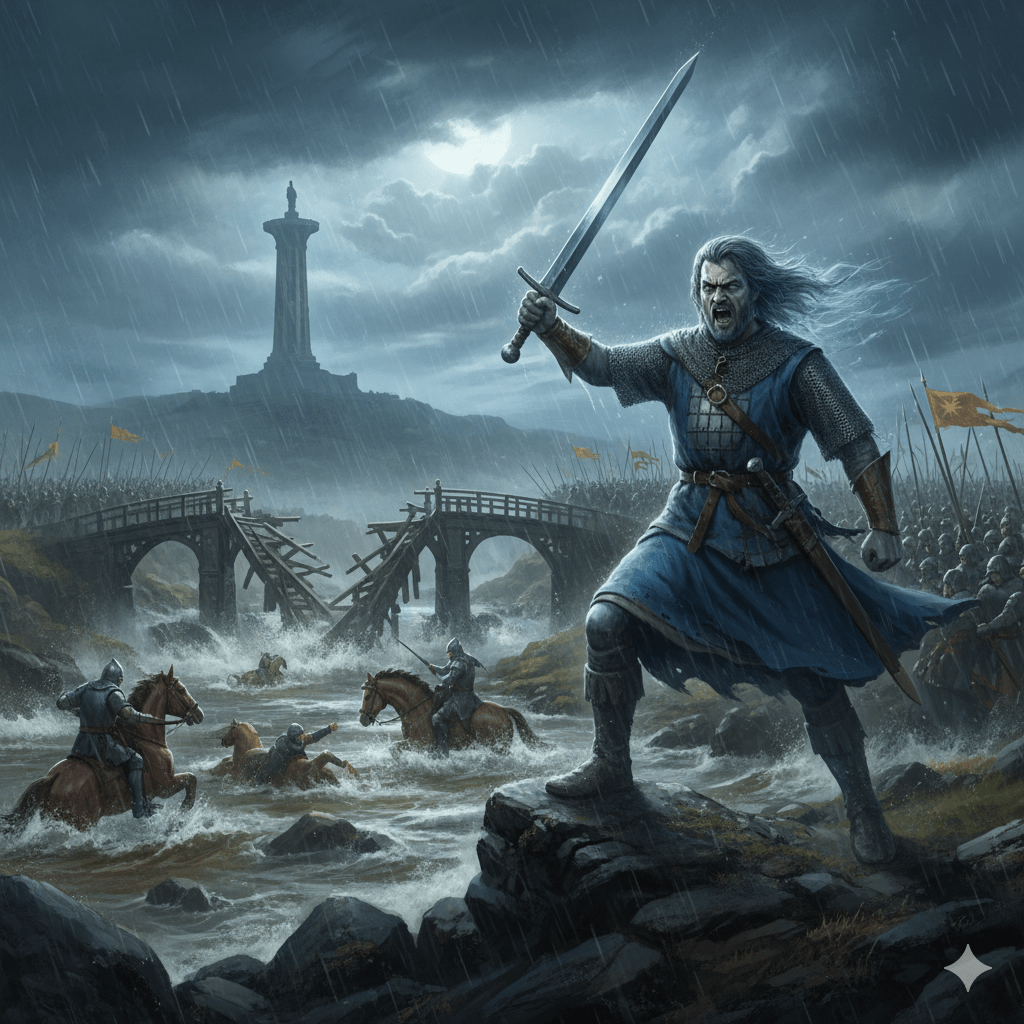
The Landsknechte and Spanish troops, roaring in vengeful ecstasy, smashed through the Vatican district. They found the Swiss Guard—resplendent in their yellow, blue, and red uniforms—standing like a brightly colored, steel-tipped forest of pikes.
The fighting was savage and close-quarters. The Landsknechte, typically accustomed to fighting in massive pike formations, were shocked by the ferocity of the Swiss. They fought with the cold, methodical professionalism they were famous for, but the German and Spanish mercenaries outnumbered them by well over a hundred to one. It was a chaotic melee of slashing halberds and shattering pikes.
The ground of the Teutonic Cemetery became saturated with blood. Captain Röist, fighting alongside his men with ferocious courage, fell mortally wounded after seeing his own son cut down beside him. He fought until the end, demanding his men hold the line.
The story goes that 147 of the 189 Swiss Guard perished on that hallowed ground. Only 42, deemed essential for the Pope’s immediate protection, were ordered to break formation and escort Clement VII, while the rest completed their sacred and final mission. The sacrifice was absolute. This stand became known as the “Tapestry Massacre” (referencing the nearby tapestries that were also destroyed in the chaos), and it is the defining moment of the Guard’s 500-year history.
The Passetto and the Great Escape
While the Swiss bled out at the cemetery, Pope Clement VII, still dressed in his white robes and chasuble, made his desperate flight.
Cardinal Pucci and Benvenuto Cellini, the famous artist, metalworker, and mercenary, personally assisted the pontiff. Cellini later boasted in his autobiography of taking charge of the cannon on Castel Sant’Angelo and personally shooting the Duke of Bourbon (though this claim is widely disputed, it illustrates the chaos of the day).
The Pope was hustled up the concealed stairs and rushed along the Passetto di Borgo. This 800-meter-long aerial corridor, dating back to the 9th century, was the ultimate papal panic button. As the Landsknechte broke through, Clement VII looked down from the high walls of the Passetto and saw his city, his seat of power, descending into anarchy.
He reached the cylindrical fortress of Castel Sant’Angelo, the colossal former mausoleum of Emperor Hadrian, just as the last surviving Swiss Guardsmen arrived to bolt the massive bronze doors behind them. They had succeeded. The Pope was safe, though his city was lost.
The 42 surviving Swiss Guard, along with the few hundred other defenders and cardinals who had also managed to squeeze into the castle, prepared for a siege. From the battlements of the fortress, they could only watch the horrifying events unfolding below.
Hell on Earth: The Sack and Imprisonment
What followed was one of the most brutal and prolonged sacks in European history. For over a week, the Imperial forces plunged Rome into an orgy of looting, torture, and destruction unmatched since the Barbarian incursions. The city’s population was roughly 55,000; estimates suggest between 8,000 and 12,000 were killed in the fighting and the subsequent violence.
The Landsknechte were particularly ruthless. Churches were desecrated, nuns were raped, relics were destroyed, and cardinals were tortured. Priceless works of art, libraries, and ancient manuscripts were either stolen or used as bedding and kindling. Soldiers melted down sacred vessels for their gold and played grotesque, mocking card games using the papal seals as chips. Rome’s accumulated wealth of centuries was plundered or destroyed.
Pope Clement VII watched from the safety of Castel Sant’Angelo as the smoke rose from the burning districts. He was effectively a prisoner in his own castle for nine months, enduring the ignominy of the siege.
Finally, on December 6, 1527, Clement VII formally surrendered. He was forced to pay a ransom of 400,000 ducats (an astronomical sum), cede several papal territories to the Emperor, and commit to holding fast in the Castel Sant’Angelo until the ransom was paid. The few remaining Swiss Guardsmen who had survived the siege were retained, but they were a ghost of their former strength. The humiliation was total. When Clement was finally released, he disguised himself as a peddler and fled Rome.
The Legacy of Loyalty: The Vow of May 6th
The Sack of Rome dramatically shifted the balance of power in Europe, effectively ending the Italian Renaissance’s golden age. But for the small, doomed force of mercenaries from the Swiss Cantons, it was the start of an unbroken tradition.
The 1527 stand was not merely a military defeat; it was a profound act of loyalty that cemented the Guard’s legendary status. After the recovery of the Papal States and the slow rebuilding of the Vatican, the role of the Swiss Guard was formally redefined. Their dedication was absolute: their allegiance was not to the Papal States, the Italian politics, or even the reigning Pope’s family, but solely to the person of the Supreme Pontiff.
To this day, every new recruit to the Pontifical Swiss Guard takes his oath on May 6th, the anniversary of the Sack of Rome. It is a stark and somber reminder that the commitment they make is not to parade or ceremony, but to a willingness to lay down their lives, just as the 147 men did nearly five centuries ago.
The Guard survived the sack, not by winning the battle, but by honoring their word, providing a bloody, brutal, and ultimate example of loyalty that ensured the Pope’s line of succession remained unbroken. They proved that honor, when backed by cold steel and unbreakable resolve, is a force more enduring than any empire.
Sources
- Chambers, D. S. (2006). Popes, Cardinals and War: The Military Church in Renaissance and Early Modern Europe. I.B. Tauris. (Context on Papal military history and the League of Cognac).
- Hook, Judith. (1972). The Sack of Rome 1527. Palgrave Macmillan. (A primary text detailing the events, violence, and political fallout of the sack, including the role of the Landsknechte).
- Hurlbut, Dana. (2012). The Pope’s Own: An Authentic History of the Swiss Guards. Createspace. (Focuses specifically on the history and traditions of the Swiss Guard, including the defense on May 6th).
- Cellini, Benvenuto. (Written c. 1558-1566). Autobiography. (Provides a contemporary, if often self-aggrandizing, firsthand account of the events from inside Castel Sant’Angelo).
- Guggenheim, Eric. (1987). History of the Swiss Guard. Swiss Guard Museum. (Details the life and death of Captain Kaspar Röist and the specific numbers of the Guard’s casualties)



 History in 5 Minutes or less
Leave a comment