
The world stood divided, carved by history into two unequal halves. To the West lay the scrappy, fractious city-states of Greece and the rising kingdom of Macedon; to the East sprawled the Achaemenid Empire—Persia—a vast, glittering dominion that stretched from the Aegean Sea to the Indus Valley. For two centuries, this colossal empire had dictated terms to the Mediterranean world.
Then came a young man with fire in his blood and the gods in his lineage: Alexander III of Macedon.
In 334 BCE, at the tender age of 22, Alexander crossed the Hellespont (the Dardanelles) into Asia Minor. He was not merely starting a war; he was fulfilling his father’s dream, fulfilling a Greek fantasy of vengeance, and, most importantly, fulfilling a destiny only he seemed to truly grasp. He had inherited an unparalleled war machine from his father, Philip II—the famed Macedonian phalanx, a bristling hedgehog of 16-foot sarissa spears—but he would need more than steel; he would need divine luck, daring, and a mind that moved faster than any cavalry charge.
His army of roughly 40,000 men was all he had. Facing him was Darius III, the King of Kings, whose resources were literally incalculable. It was a mismatch of epic proportions—one that Alexander was determined to win.
Granicus: The Bloody Baptism (334 BCE)
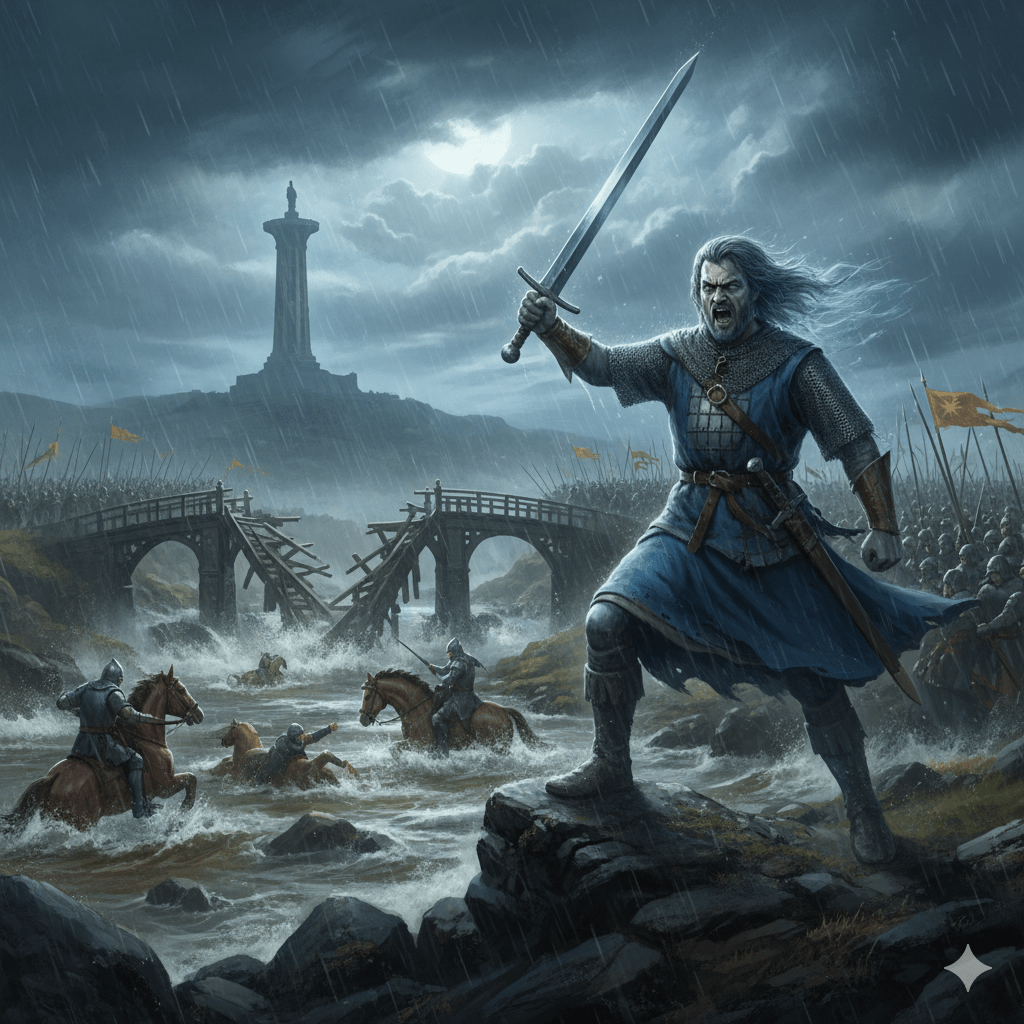
Alexander’s first encounter with Persian resistance came at the Granicus River, near the ancient city of Troy. The local Persian satraps (governors), believing their numbers were superior and the river provided a perfect defensive line, drew up their forces. They commanded a powerful contingent of Greek mercenaries and elite cavalry.
Alexander, typically, refused to wait. His senior general, Parmenion, advised caution, suggesting they wait until dawn to cross the river safely. Alexander simply replied that to hesitate now would be to admit the Persian Empire was greater than the Macedonian, a psychological blow he could not afford. “The Hellespont has been crossed,” he declared, “we must now march on, for the Persians are now but shadows of men.”
What followed was a terrifying, chaotic assault. Alexander led the charge himself at the head of the Companion Cavalry, plunging into the muddy currents, immediately under fire from arrows and javelins. This was less a tactical maneuver and more a declaration of intent: I will risk everything.
Alexander was immediately marked out by the enemy. A Persian nobleman, Spithridates, raised his sword to strike the king down. Only the timely intervention of Cleitus the Black, who severed Spithridates’ arm just as the blade descended, saved the young King’s life.
The sight of their King nearly dying—and the ferocity of the Macedonian counter-attack—broke the morale of the defenders. The Persian line crumbled. By dusk, the satraps were scattered, and Alexander had not just won a battle; he had killed or captured thousands of men, solidified his reputation for reckless genius, and secured the gateway to Asia Minor. The message was sent: The King of Kings was no longer untouchable.
The Gordian Knot: Propaganda and Destiny (333 BCE)
Following Granicus, Alexander spent a year marching through Asia Minor, liberating Greek cities and effectively incorporating the western Persian provinces into his burgeoning empire. He was a master of propaganda, presenting himself not as a conqueror, but as a liberator from Persian tyranny. At city after city, he restored democracy and dedicated temples to the gods.
It was in the city of Gordium, Phrygia, that his quest for destiny took a literal, symbolic turn. Here resided the legendary Gordian Knot, an intricate, ancient entanglement that supposedly bound the yoke of an ox-cart. An oracle had long foretold that whoever could untie this specific knot would become the ruler of all Asia.
The task proved impossible for everyone who tried. When Alexander was presented with the challenge, he examined the tangled ropes, realized the rules were arbitrary, and in a famous moment of decisive audacity, drew his sword and simply sliced the knot in two.
Whether the story is entirely true or a later fabrication, the message resonated: Alexander was not bound by traditional rules or impossible obstacles. His destiny was not to be untangled by patience but to be seized by force. The gods, or at least the people, certainly seemed to agree. This act cemented his image as a man chosen by fate.
Issus: Clash of Kings (333 BCE)
After a successful campaign consolidating his gains, Alexander learned that Darius III himself was marching west with the full might of the Persian army—estimated at over 100,000 men—to crush the Macedonian upstart. The two massive forces played a game of cat-and-mouse along the mountainous coastal region near the town of Issus (modern Turkey).
Darius, confident in his numbers, made a critical mistake: he moved his huge army through the narrow coastal plain, a geographical choke-point that negated his vast numerical advantage. When Alexander, having bypassed Darius, realized his enemy was now trapped in the confined space behind him, he wheeled his army around and prepared for battle.
The Battle of Issus was a masterpiece of tactical control. Darius, mounted on his royal chariot in the center of the line, commanded an immense host. But the terrain prevented his cavalry wings from flanking Alexander. The battle hinged on Alexander’s personal command.
Placing himself, as always, on the right flank, Alexander led his elite Companion Cavalry in a devastating, unstoppable charge. They smashed through the Persian left wing, then executed a swift turn, aiming directly for Darius’s chariot.
The sight of Alexander closing in on the King of Kings was too much for the Persian nerve. Darius III, terrified of being captured or killed, abandoned his sacred post, turned his chariot, and fled the field in a panic. The moment the King of Kings fled, the immense Persian army—despite fighting bravely elsewhere on the line—dissolved into a rout.
The victory was immediate and absolute. While Darius escaped, his entire royal family—his mother, wife, two daughters, and young son—were captured. The spoils included the royal treasury and the Persian military standard. Alexander treated Darius’s family with surprising reverence and kindness, a move that earned him respect from both his troops and the people of the Persian Empire. This was no mere military victory; it was a political coup. The line of the Achaemenid Empire was now, quite literally, Alexander’s prisoner.
The Siege of Tyre and the Gates of Egypt (332 BCE)
Instead of pursuing Darius immediately, Alexander executed one of the most brilliant and determined strategic decisions of the war: he secured his flank. He knew that so long as the Persians controlled the seas and the powerful port cities of the Levant, his supply lines would be vulnerable.
The island city of Tyre (in modern Lebanon) proved the most challenging obstacle. This Phoenician fortress was considered impregnable, sitting half a mile offshore. When the Tyrians refused him entry, Alexander was enraged. He could not leave an unsubdued naval base at his back, and so, for seven grueling months, he ordered the construction of a massive causeway—a half-mile-long stone bridge—to connect the mainland to the island.
It was an engineering feat of insane ambition, constantly harassed by Tyrian ships and siege weapons. But Alexander’s determination was ironclad. By utilizing captured Phoenician and Cypriot ships, he finally broke the city’s defenses. When the city fell, the cost of its defiance was horrific: thousands were executed or sold into slavery, a harsh lesson designed to discourage any future resistance.
With the Levant secured, Alexander marched south to Egypt. The Egyptians, who had long suffered under Persian rule, greeted Alexander not as a foreign conqueror, but as a liberator. The local priests recognized him as a divine Pharaoh, the son of the god Amun-Ra.
Here, at the mouth of the Nile, Alexander paused to found the greatest monument to his own name: Alexandria. Planned with meticulous precision and dedicated to becoming the intellectual and commercial hub of the new world, Alexandria was a statement that Alexander was here not just to destroy, but to build a lasting, Hellenic empire. The Egyptian interlude rejuvenated his spirit and solidified his claim to divinity, setting the stage for the final confrontation.
Gaugamela: The Triumphant Chariot (331 BCE)
The final, decisive showdown occurred two years after Issus. Darius III, having gathered a colossal army from the far reaches of his empire—including Bactrian cavalry, Indian chariots, and even war elephants—chose the flat, open plains of Gaugamela (modern Iraq) for the battle. Darius had meticulously smoothed the ground, hoping to maximize the effectiveness of his scythed chariots and nullify the maneuvering genius of the Macedonian phalanx. Estimates for his army vary wildly, but it was certainly the largest force Alexander had ever faced, possibly numbering over 200,000 men.
Alexander, with his army of around 47,000, approached with extreme caution. After scouting the terrain, he developed his most brilliant and daring plan yet. The night before the battle, Parmenion once again suggested a night attack to offset the disparity in numbers. Alexander refused, famously stating, “I will not steal the victory.” He wanted a clear, decisive win, proven in the light of day.
On the morning of October 1, 331 BCE, the armies engaged. The vast Persian line stretched out far beyond the Macedonian wings, threatening to envelop them completely. Alexander responded by positioning his flanks in an ingenious oblique formation, allowing them to pivot and counter-attack rather than simply being crushed.
The battle began with Darius unleashing his scythed chariots. Alexander’s troops simply opened their ranks, allowing the chariots to pass harmlessly through, where they were dispatched by reserves. As the Persians overcommitted their cavalry wings to the enveloping maneuver, Alexander seized his opportunity.
Leading the Companion Cavalry and the elite hypaspists, Alexander charged diagonally to the right, creating a wedge that pulled the strongest Persian cavalry away from the center. Seeing a momentary gap open up between the overextended Persian wing and Darius’s royal guard, Alexander executed a sudden, terrifying swerve. He and the Companions hammered into the exposed Persian center, aiming directly for the King of Kings.
The sheer ferocity and speed of this attack shattered the Persian center instantly. Just as at Issus, Darius III, finding himself once again threatened by Alexander’s spear, panicked. He fled the field, leaving his massive army behind.
The flight of Darius turned the battle into a slaughter. Alexander had won the world. Gaugamela was not just a victory; it was the final, total disintegration of the Achaemenid Empire’s military power.
The Great Cities and the New Shah (331-330 BCE)
With Darius III in flight, Alexander marched into the heart of the Persian world. Babylon surrendered without a fight, welcoming him as a liberator and confirming his title as King of Asia. Next came Susa, where vast quantities of gold, silver, and the lost treasures of the Greek temples (stolen by Xerxes a century and a half earlier) were recovered.
The final, symbolic act came in Persepolis, the ancestral and ceremonial capital of the Achaemenid kings. After securing its treasures, Alexander gave the order that cemented the end of the old order: the palace complex of Persepolis was burned to the ground. Though historical debate exists over whether this was a deliberate act of vengeance for the Persian burning of Athens, or a drunken accident, the message was clear: the Persian Empire of Cyrus and Darius was no more.
The King of Kings, Darius III, was now a fugitive, desperately trying to raise a new army in the eastern satrapies. Alexander pursued him relentlessly across Media and Parthia. The hunt ended tragically. In 330 BCE, Alexander found Darius—not alive, but murdered by his own cousin, the treacherous satrap Bessus, who sought to usurp the Persian throne.
Alexander was genuinely furious. He had wanted to defeat Darius in open battle and accept his submission, thus legitimizing his own rule. Instead, he found an undignified, bloody end to a great dynasty. Alexander gave Darius a full, royal funeral, publicly executed Bessus for regicide, and formally adopted the titles and trappings of the Persian monarchy. He became the new Shahanshah—King of Kings—ruler of an empire that now stretched from the Aegean to the Oxus River.
Alexander had conquered the world he knew, merging East and West, and setting the stage for his next and final, doomed ambition: the exploration and conquest of the distant lands of India. The young boy king was now the undisputed monarch of the largest empire the world had ever seen.
Conclusion: The Legacy of a Lightning Conquest
By 330 BCE, Alexander the Great had accomplished the impossible. In less than five years, he had systematically dismantled the Achaemenid Empire, conquering twenty times the territory of his homeland. His success was forged by the disciplined military machine of Macedon, his masterful understanding of cavalry, and his own extraordinary, often terrifying, courage. He was a man driven by relentless ambition, a student of Aristotle who saw himself as a successor to Achilles, and a ruler who sought to unify mankind under a single, Hellenic banner.
While the empire splintered shortly after his premature death in Babylon in 323 BCE, his conquest fundamentally reshaped civilization. It opened the East to Greek culture, commerce, and language, ushering in the Hellenistic Age—a world that would eventually give rise to Rome. The legacy of his lightning conquest was the creation of a interconnected world, forever changed by a King who refused to steal his victories, but rather, seized them with a sword.
Sources
- Arrian – Anabasis of Alexander (The most reliable primary source, based on accounts by Alexander’s officers, Ptolemy and Aristobulus).
- Plutarch – Parallel Lives: Life of Alexander (Excellent for biographical detail and personality).
- Curtius Rufus – Historiae Alexandri Magni (Focuses on the campaign and military drama).
- Lane Fox, Robin – Alexander the Great (A definitive modern biography).
- Worthington, Ian – By the Spear: Philip II, Alexander the Great, and the Rise and Fall of the Macedonian Empire (Provides crucial context on Philip’s role).



 History in 5 Minutes or less
Leave a comment