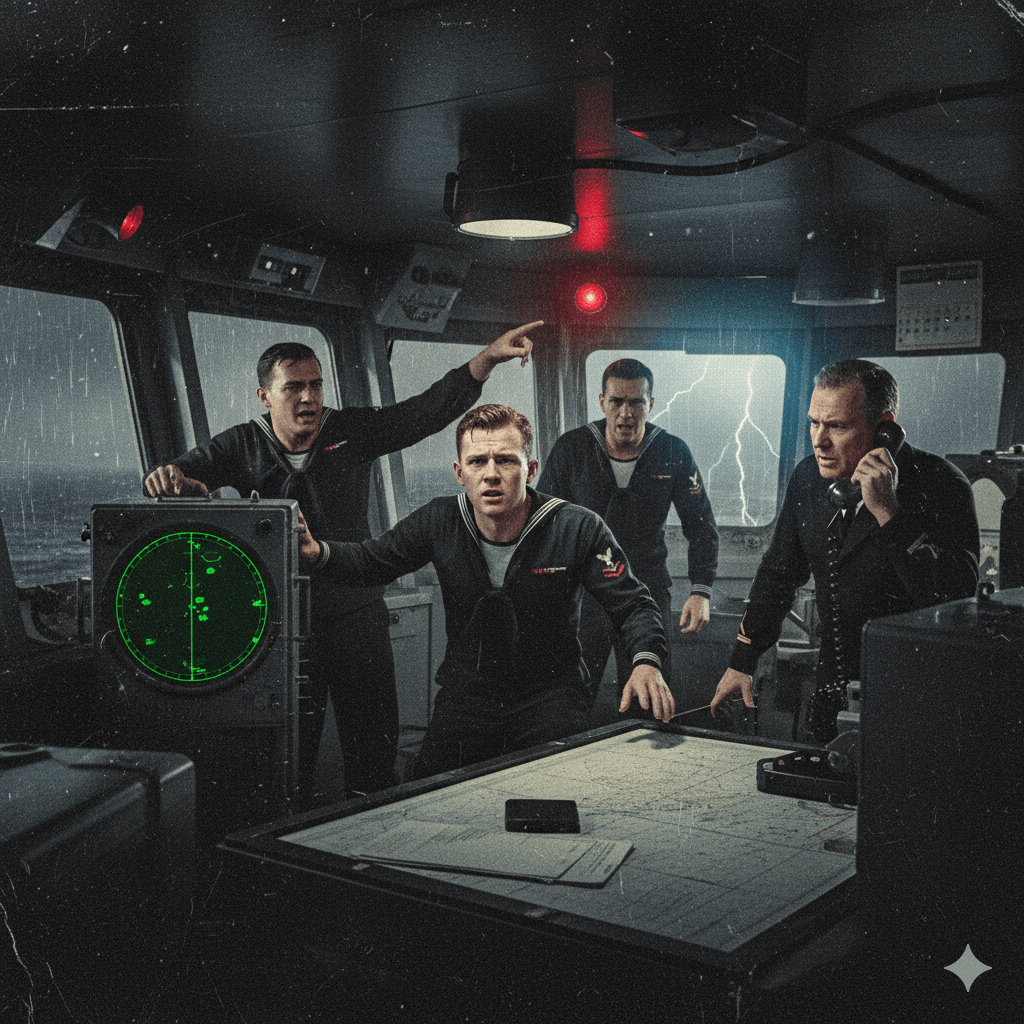
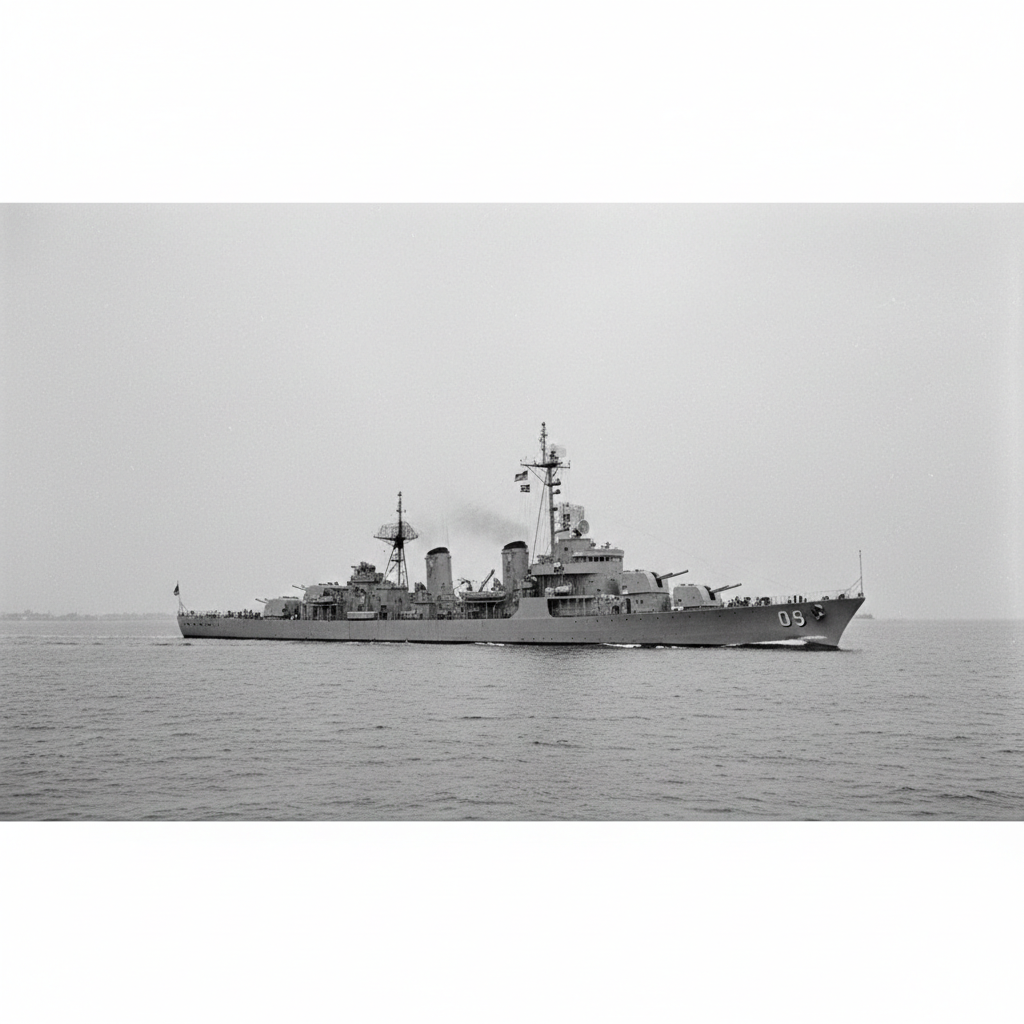
The destroyer USS Maddox cut through the calm waters of the Gulf of Tonkin, its crew blissfully unaware that in just a few days, their routine patrol would ignite a conflict that would forever alter the course of American history. How could a few misinterpreted radar blips, a stormy night, and a healthy dose of Cold War paranoia escalate into a full-blown war costing thousands of lives?
A Cold War Crucible
The year is 1964. The Cold War is in full swing, and the United States is deeply entrenched in the ideological battle against communism. Southeast Asia, a region still reeling from the aftermath of French colonial rule, has become a critical front in this global struggle. Vietnam, in particular, is a hotbed of tension, divided into a communist North and a U.S.-backed South. The domino theory, which posited that if one nation in a region fell to communism, the others would follow, loomed large in the minds of American policymakers.
President Lyndon B. Johnson, who had inherited the Vietnam problem after the assassination of John F. Kennedy, was under immense pressure to prevent the spread of communism. Yet, he was also wary of committing American troops to a ground war in Asia, a conflict that had already proven costly for the French. Covert operations, however, were another matter entirely.
Operation 34A and the USS Maddox
Enter Operation 34A, a series of clandestine raids carried out by South Vietnamese commandos, trained and supported by the United States. These operations, often involving attacks on North Vietnamese coastal facilities, were designed to harass and pressure the North Vietnamese regime. The USS Maddox, a destroyer on an intelligence-gathering mission code-named DESOTO, was operating in the Gulf of Tonkin, collecting electronic signals intelligence (SIGINT) to support these 34A raids. The Maddox’s mission was to observe, not engage, but its presence was a clear signal of American involvement in the escalating conflict.
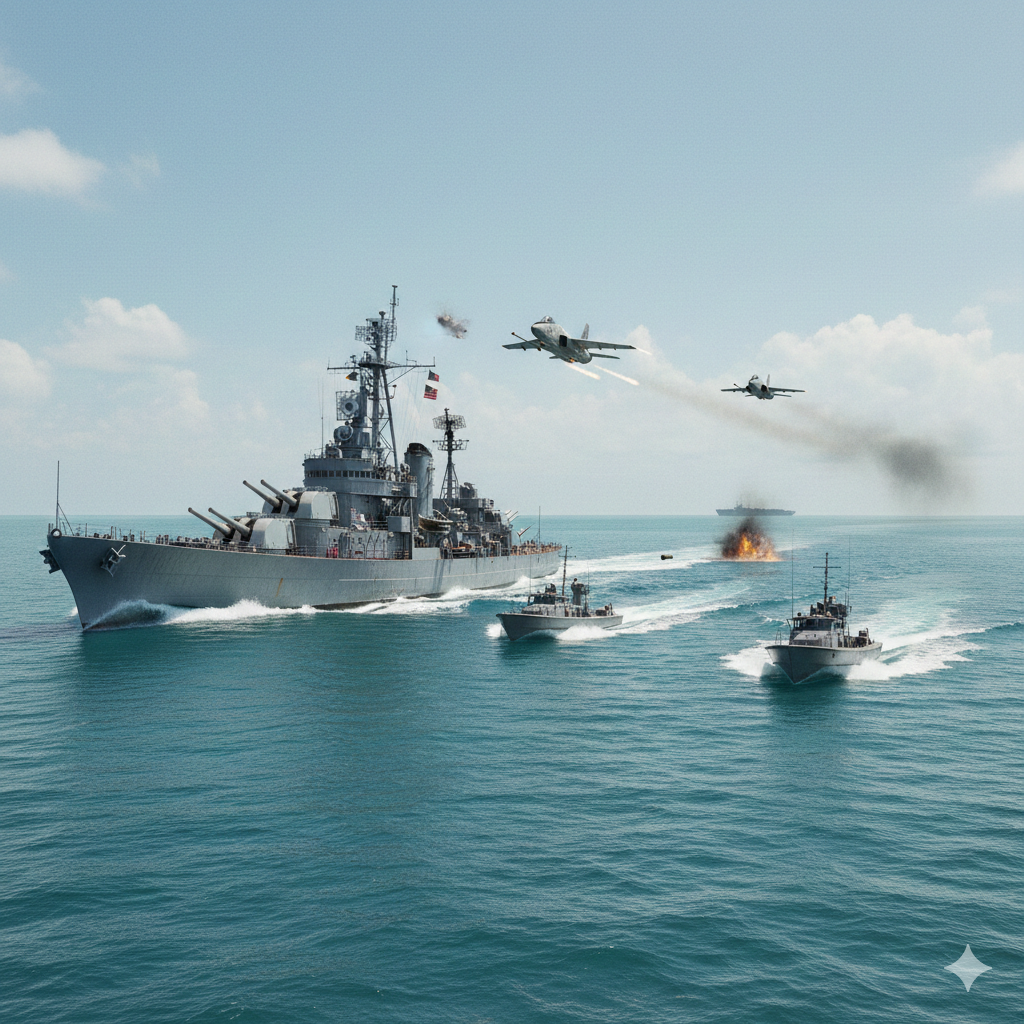
On August 2, 1964, the USS Maddox was cruising in international waters, about 28 miles off the coast of North Vietnam. The day was sweltering, the sea calm. Suddenly, three North Vietnamese P-4 torpedo boats, likely provoked by recent 34A raids on nearby islands, launched a surprise attack.
The Maddox, a formidable warship, was ready. Its crew, having been on alert, quickly engaged the attacking boats. With the support of F-8 Crusader jets launched from the nearby aircraft carrier USS Ticonderoga, the Maddox successfully repelled the assault. One North Vietnamese torpedo boat was reportedly sunk, and the others damaged. The Maddox sustained only minor damage from a single machine-gun round. It was a clear victory for the U.S. Navy, but it was just the beginning of a much larger deception.
The “Second” Attack: A Fog of War and Deception
Two days later, on the night of August 4th, the USS Maddox, now joined by the destroyer USS Turner Joy, was again patrolling the Gulf of Tonkin. The weather was abysmal – a dark, stormy night with heavy seas and poor visibility. What followed would become one of the most controversial events in modern American history.
Reports from the destroyers began flooding in: radar contacts indicating multiple torpedo boats, sonar readings suggesting torpedoes in the water, and frantic communications about an ongoing engagement. The ships reported evasive maneuvers, firing at unseen targets, and intense electronic warfare. Yet, as the hours passed, doubts began to emerge.
Captain John Herrick, the commander of the destroyer division, began to question the validity of the reports. The radar operators were inexperienced, the sonar systems were acting erratically in the rough seas, and the “enemy” contacts seemed to vanish and reappear inexplicably. Herrick famously messaged his superiors, stating, “Review of action makes many reported contacts and torpedoes fired appear doubtful. Freak weather effects and overeager sonar men may have accounted for many reports. No actual visual sighting by Maddox. Suggest complete evaluation before any further action.”
Despite Herrick’s increasingly strong reservations, and the growing skepticism among some officers at the Pentagon, the initial reports of a second attack had already reached Washington. President Johnson, facing an election and eager to project an image of strength against communist aggression, seized upon the incident.
Johnson’s Decision and the Tonkin Gulf Resolution
In a televised address to the nation on August 4th, 1964, President Johnson announced that North Vietnam had launched a second, unprovoked attack against U.S. destroyers in international waters. He declared that these “acts of aggression” demanded a firm response. What he didn’t mention were the increasing doubts about the attack’s veracity, or the fact that the U.S. had been actively supporting covert operations against North Vietnam in the same area.
The following day, Johnson requested and quickly received congressional approval for the Southeast Asia Resolution, more commonly known as the Tonkin Gulf Resolution. This resolution granted the President broad authority “to take all necessary measures to repel any armed attack against the forces of the United States and to prevent further aggression.” It was, in essence, a blank check for military action in Vietnam, without a formal declaration of war.
The Aftermath: Escalation and a Lingering Shadow
Armed with the Tonkin Gulf Resolution, President Johnson rapidly escalated U.S. involvement in Vietnam. What began as an advisory role quickly transformed into a full-scale military intervention, with hundreds of thousands of American troops deployed to Southeast Asia. The bombing campaigns intensified, and the ground war became increasingly brutal and protracted.
Years later, declassified documents and extensive historical research, including the Pentagon Papers, would definitively prove that the second attack in the Gulf of Tonkin almost certainly never happened. It was a combination of faulty intelligence, misinterpretations, and a deliberate manipulation of information by the Johnson administration to justify military intervention. Secretary of Defense Robert McNamara, a key architect of the Vietnam War, later admitted that there was no conclusive evidence of a second attack.
The Tonkin Gulf Incident and the subsequent resolution became a symbol of government deception and the perils of unchecked executive power. It fueled the anti-war movement at home and deeply eroded public trust in the government. The war in Vietnam would claim the lives of over 58,000 Americans and millions of Vietnamese, leaving an indelible scar on both nations.
Why This Still Matters
The Gulf of Tonkin incident isn’t just a dusty chapter in a history book; it is the ultimate cautionary tale regarding intelligence, executive power, and the “fog of war.” First, it highlights the danger of confirmation bias. In 1964, the Johnson administration wanted a reason to escalate the conflict to prevent a communist takeover. When the “ghost” signals appeared on the radar on August 4th, they didn’t wait for a second opinion—they took the data that fit their narrative and ran with it. In an age of instant digital information and deepfakes, the ability of a leader to pause and verify remains our greatest defense against unnecessary conflict.
Second, it changed the way the U.S. goes to war. The Tonkin Gulf Resolution gave the President a “blank check,” essentially bypassing the Constitutional requirement for Congress to declare war. This set a precedent for future executive-led military actions, a topic that remains at the heart of American political debate today.
Finally, it reminds us that transparency is the bedrock of democracy. When the truth about the “second attack” finally came to light through the Pentagon Papers, it created a “credibility gap” between the government and the public that has never fully healed. Understanding Tonkin is essential for any citizen who wants to ask the right questions when told that military intervention is “inevitable.”
Sources
- The National Security Archive (George Washington University): The Gulf of Tonkin Incident, 40 Years Later. (A collection of declassified internal cables and transcripts).
- Hanyok, Robert J.: “Skunks, Bogies, Silent Hounds, and the Flying Fish: The Gulf of Tonkin Mystery, 2-4 August 1964.” Cryptologic Quarterly (NSA declassified study).
- The Pentagon Papers: Gravel Edition, Volume 3, Chapter 2, “U.S. Ground Strategy and Force Deployments, 1965-1967.”
- McNamara, Robert S.: In Retrospect: The Tragedy and Lessons of Vietnam. (1995).
- The American Presidency Project: Lyndon B. Johnson’s Message to Congress on the Gulf of Tonkin (August 5, 1964).

 History in 5 Minutes or less
Leave a comment