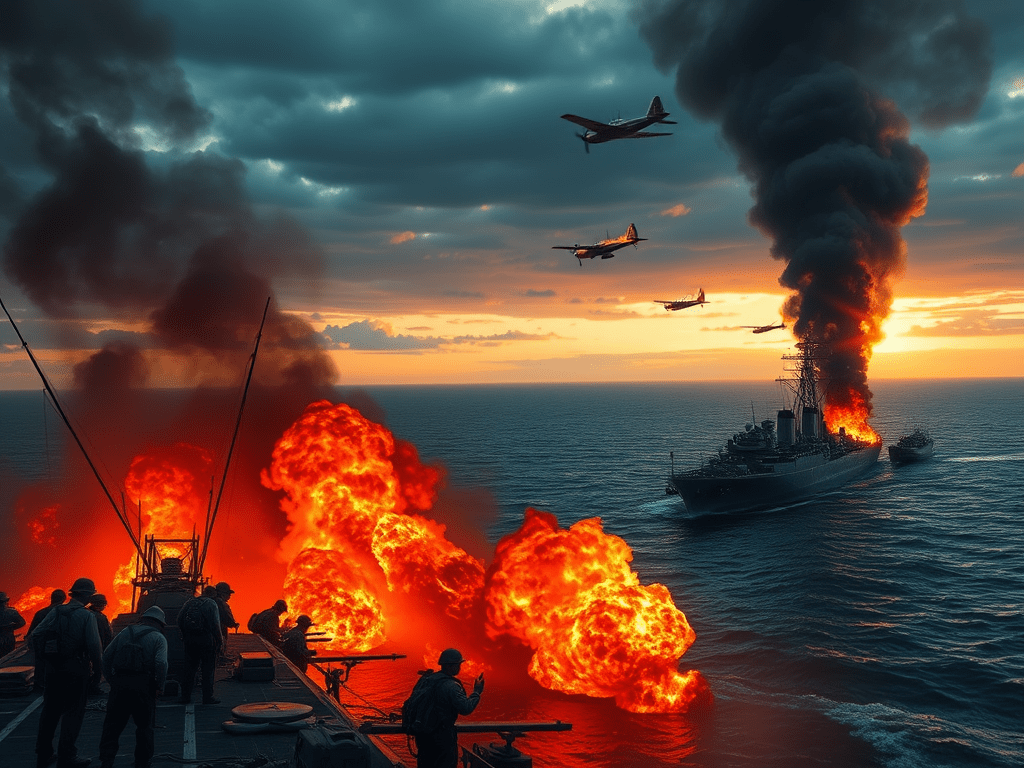
On the morning of December 7, 1941, the United States Navy was successfully and efficiently destroyed while most of its sailors were still looking for their second cup of coffee. It was a masterpiece of military planning that should never have happened, executed by a nation that—according to American intelligence at the time—wasn’t capable of such a feat.
But to understand how the “Gibraltar of the Pacific” turned into a graveyard of smoking steel in just ninety minutes, we have to rewind. We have to go back to a time when Tokyo felt backed into a corner, Washington was blinded by its own ego, and a single radar blip was dismissed as “nothing to worry about.”
The Poker Game of the Pacific
By 1941, the relationship between the United States and the Empire of Japan was less like a diplomatic partnership and more like a high-stakes poker game where both players are hiding revolvers under the table.
Japan was hungry. Having invaded Manchuria in 1931 and launched a full-scale war against China in 1937, the Japanese military machine required a constant diet of oil, rubber, and scrap metal. The United States, watching from across the pond, wasn’t thrilled. President Franklin D. Roosevelt began tightening the screws, eventually slapping a total oil embargo on Japan.
For Japan, this was an existential threat. Without oil, their navy would be a collection of very expensive paperweights within months. They had two choices: pull out of China (which their pride and military culture wouldn’t allow) or seize the oil-rich territories of the Dutch East Indies and Southeast Asia.
The only thing standing in their way? The U.S. Pacific Fleet, which FDR had provocatively moved from San Diego to a little place called Pearl Harbor in Hawaii.
The Architect of Doom: Isoroku Yamamoto
Enter Admiral Isoroku Yamamoto. He was a man who loved gambling, spent years studying at Harvard, and served as a naval attaché in Washington. He knew America. He knew its industrial capacity. And he famously warned his superiors: “If I am told to fight… I shall run wild for the first six months of a year, but I have utterly no confidence for the second and third years.”
Yamamoto’s plan was a desperate “Hail Mary.” If Japan could knock out the U.S. Fleet in one decisive blow, they could seize the Pacific, build a defensive perimeter, and negotiate a peace treaty before the “sleeping giant” could fully wake up.
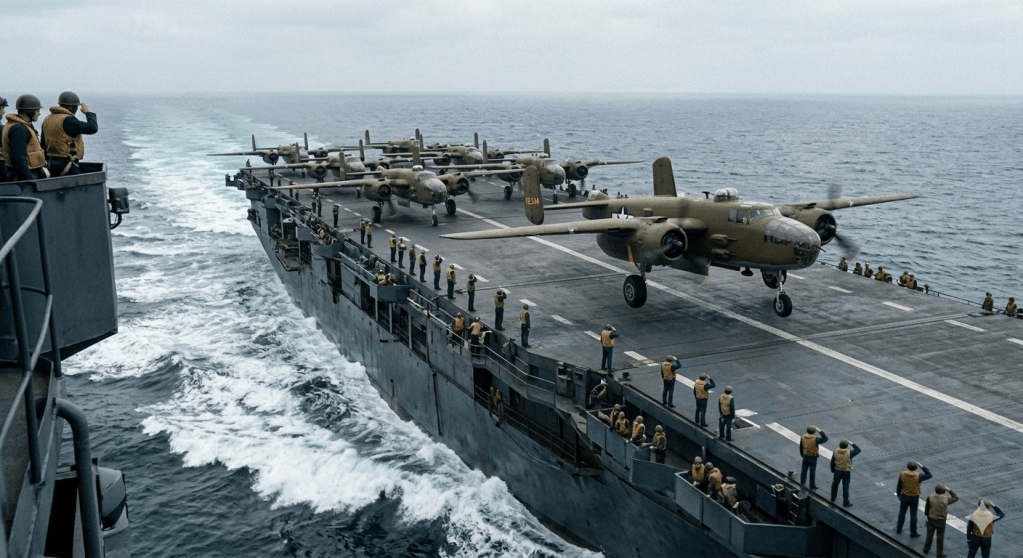
The plan was audacious. It required six aircraft carriers to sail 3,000 miles across the choppy North Pacific in total radio silence, avoiding shipping lanes, and launching a coordinated aerial strike using torpedoes that—at the time—weren’t even supposed to work in shallow water.
A Comedy of Errors and Missed Warnings
The tragedy of Pearl Harbor isn’t just that it happened; it’s that the U.S. had several chances to see it coming.
- The “Purple” Code: U.S. intelligence had broken Japan’s highest diplomatic code. They knew a break in relations was coming. They knew an attack was possible. But they assumed it would be in the Philippines or Thailand. Hawaii? Too far. Too shallow. Too “safe.”
- The Midget Submarine: At 6:45 AM on December 7, the USS Ward spotted and sank a Japanese midget submarine trying to sneak into the harbor. The report was sent, but it got bogged down in the bureaucracy of Sunday morning breakfast.
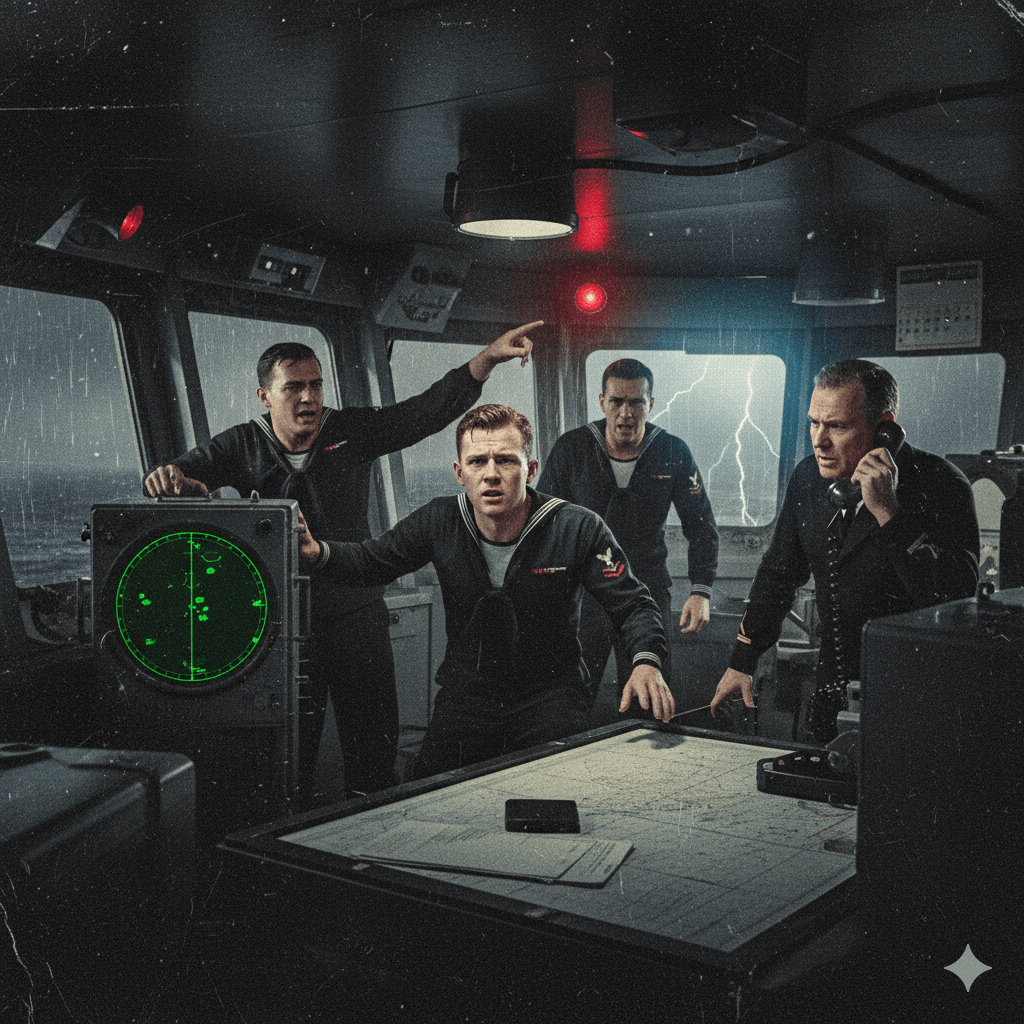
- The Radar Blip: At 7:02 AM, two privates at a radar station on northern Oahu saw a massive “cloud” of aircraft on their screen. It was the largest flight they’d ever seen. They called it in. The officer on duty, thinking it was a scheduled flight of American B-17s coming from the mainland, uttered the most infamous words in military history: “Don’t worry about it.”
0748 Hours: “Tora! Tora! Tora!”
Commander Mitsuo Fuchida looked down from his cockpit and couldn’t believe his eyes. Below him, the U.S. Pacific Fleet was lined up like sitting ducks. There were no torpedo nets. No barrage balloons. The planes at Hickam and Wheeler fields were parked wingtip-to-wingtip on the runways to prevent “sabotage” from local residents—making them perfect targets for strafing.
Fuchida fired a green flare. The signal was “Tora! Tora! Tora!” (Tiger! Tiger! Tiger!), indicating that total surprise had been achieved.
The first wave of 183 Japanese planes descended. Dive bombers went for the airfields to ensure no American planes could get off the ground. Torpedo bombers went for “Battleship Row.”
The sailors on the USS Arizona, the USS Oklahoma, and the USS West Virginia were just waking up. Some thought it was a drill. Others thought it was a particularly realistic movie shoot. Then the first explosions rocked the harbor.
The Death of the USS Arizona
The most iconic and horrifying moment of the attack occurred at 8:06 AM. A Japanese high-altitude bomber dropped a 1,760-pound armor-piercing bomb. It sliced through the decks of the USS Arizona and ignited the forward gunpowder magazines.
The explosion was cataclysmic. The ship didn’t just sink; it was nearly lifted out of the water. Over 1,100 men were killed in seconds. To this day, the Arizona remains at the bottom of the harbor, a tomb for the majority of its crew, still leaking small droplets of oil—often called “black tears”—to the surface.
While the Arizona was the most dramatic loss, the Oklahoma capsized, trapping hundreds of men inside its hull. Sailors on nearby ships could hear the trapped men banging on the steel walls with wrenches for days, a haunting sound that those who survived never forgot.
Heroes in the Smoke
Amidst the chaos, incredible acts of bravery emerged.
Doris “Dorie” Miller, a Mess Attendant on the USS West Virginia, had never been trained on a machine gun because of the Navy’s segregationist policies. When the attack began, he carried his wounded captain to safety, then jumped behind an unmanned .50-caliber anti-aircraft gun and began firing at Japanese planes. He became the first African American to be awarded the Navy Cross.
In the air, pilots George Welch and Kenneth Taylor managed to get their P-40 fighters into the sky from a small auxiliary field. Between the two of them, they shot down at least six Japanese planes, providing a rare moment of American retaliation during the onslaught.
The Second Wave and the Great Mistake
A second wave of 171 planes arrived around 9:00 AM, focusing on the shipyard and remaining vessels. By 9:45 AM, it was over. The Japanese planes turned back toward their carriers, leaving behind a horizon of black smoke and 2,403 dead Americans.
However, the Japanese made a critical strategic error. They focused on the “prestige” targets—the battleships. They failed to launch a third wave to destroy the harbor’s fuel oil storage tanks, the dry docks, and the submarine base.
Admiral Chester Nimitz later remarked that if the Japanese had destroyed the oil tanks—which were all above ground—the war would have been prolonged by another two years because the U.S. would have had no fuel to launch a counter-offensive.
More importantly? The U.S. aircraft carriers—the Enterprise, Lexington, and Saratoga—were not in port. They were out at sea on maneuvers. The very weapons that would eventually win the war for the U.S. were untouched.
“A Date Which Will Live in Infamy”
The next day, President Roosevelt addressed a joint session of Congress. His voice was steady but filled with resolve as he called December 7 “a date which will live in infamy.”
The isolationist sentiment that had kept America out of the war evaporated instantly. Men rushed to recruitment centers. The “Sleeping Giant” hadn’t just been nudged; it had been kicked awake, and it was furious.
Japan had hoped to demoralize the American spirit. Instead, they had unified a fractured nation with a singular, burning purpose: total victory.
Why This Still Matters Today
The attack on Pearl Harbor isn’t just a chapter in a history book; it’s a blueprint for understanding modern geopolitics and national security.
- The Danger of “Mirror Imaging”: The U.S. failed to anticipate the attack because they couldn’t imagine themselves doing something so risky. In intelligence, “mirror imaging”—assuming your enemy thinks like you do—is a fatal flaw that still plagues modern security.
- Technological Shifts: Pearl Harbor marked the end of the “Battleship Era” and the dawn of Carrier Aviation. It reminds us that the weapons of the last war are rarely the ones that win the next.
- National Unity: It remains the ultimate example of how a catastrophic failure can be the catalyst for a nation’s greatest triumph. It defined the “Greatest Generation” and set the stage for the American century.
- The Cost of Readiness: It serves as a perpetual reminder that peace is often fragile and that “unthinkable” events are only unthinkable until they happen.
Sources
- Lord, Walter. Day of Infamy. (1957). A classic, minute-by-minute account based on hundreds of interviews.
- Prange, Gordon W. At Dawn We Slept: The Untold Story of Pearl Harbor. (1981). Widely considered the definitive academic text on the subject.
- National Parks Service (NPS): Pearl Harbor National Memorial Archives.
- U.S. Navy History and Heritage Command: Official action reports and logs from December 7, 1941.
- Toland, John. The Rising Sun: The Decline and Fall of the Japanese Empire. (1970). Provides the crucial Japanese perspective on the lead-up to the attack.
 History in 5 Minutes or less
Leave a comment