
It is August 1940 and war rages over the continent of Europe. Nazi Germany has all but taken control of the European continent. A lone holdout stands in Germany’s way of complete European supremacy and that is Great Britain. For the better part of the summer, war raged over the skies of London in the battle commonly referred to as the Battle of Britain. The outcome looks bleak and hopeless. The British are holding on the best they can, they desperately need help. The help they need comes in the way of money and supplies from their American cousins. Since the official outbreak of the war, and the neutrality act of 1939 the United States and President Roosevelt have had trouble legally getting supplies to Europe. While President Franklin D. Roosevelt was sympathetic to the Allied cause, he was constrained by both legal restrictions and a population that remained largely isolationist at the time. The U.S. public was unwilling to become directly involved in the war, and any attempt to bypass the Neutrality Acts would have significant political ramifications. Churchill and his government were keenly aware of this, and so, they looked for a way to persuade the Americans to provide the necessary support, not just through financial aid or material support, but with the kind of cutting-edge technology that could change the balance of the war.
The Tizard Mission: A Genius Plan to Secure American Aid
The man behind the plan was Sir Henry Tizard, a British chemist and inventor. Tizard was a key figure in British defense science and had been working on a range of cutting-edge technologies, many of which were still in the experimental stages. These included radar, jet propulsion technology, advanced rockets, and even early designs for what would later become nuclear weapons.
Tizard knew that if he could convince the Americans to provide mass production capabilities for British technology, it would drastically improve the Allied war effort. Britain was severely limited in its industrial capacity due to ongoing air raids and the threat of German naval superiority. The United States, however, had vast industrial resources and an economy geared for mass production. By getting access to these resources, Britain hoped to level the playing field.
Tizard’s solution was daring he would deliver a package of the most advanced British technologies to the United States and offer it in exchange for American industrial support. These technologies would give the U.S. an immediate advantage in the war and cement the relationship between the two countries.
The Shipment: The Most Important Cargo of World War II
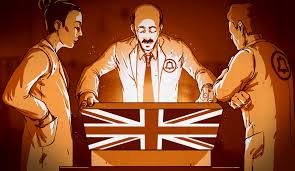
On September 1, 1940, a critical shipment was sent from Britain to the United States. The cargo, consisting of blueprints, designs, and prototypes of advanced British technologies, was packed into a trunk. It contained:
- Radar Systems – The most crucial of the technologies, radar was still in its infancy in 1940, but Britain had already made significant advancements in radar technology. British scientists had developed the world’s first long-range radar, capable of detecting enemy aircraft and ships before they could be visually spotted. This technology was critical to Britain’s ability to defend itself against the Luftwaffe in the Battle of Britain.
- Jet Engines and Jet Aircraft – Britain was ahead of the U.S. in the development of jet propulsion. The British Gloster Whittle jet engine and early designs for jet fighters would later inspire U.S. efforts to develop its own jets, significantly altering the course of aerial combat in World War II and the post-war period.
- Rockets and Superchargers – British research on rockets, including early work that would lead to the development of the V-2 rocket by Nazi Germany, was shared. Additionally, the blueprints for advanced superchargers—which could increase the performance of internal combustion engines—were also included.
- Plastic Explosives – British chemists had developed highly effective and versatile explosives, which would later be used in the sabotage efforts across Nazi-occupied Europe.
- Submarine Detection Devices – Perhaps just as importantly, the shipment included research on systems for detecting German U-boats, which were wreaking havoc on Allied shipping in the Atlantic. British research on sonar and other underwater detection devices would be crucial to winning the Battle of the Atlantic.
- The Feasibility of Nuclear Weapons – Though still in early stages, the plans for nuclear research were also part of the package. Britain had already begun its own research into the atomic bomb, and some of the foundational ideas were shared with the Americans. This exchange would eventually lead to the Manhattan Project, which would develop the first atomic bombs.
The Impact of the Tizard Mission
When the Tizard Mission arrived in Washington, it had a profound impact on U.S. military and scientific circles. The American government quickly realized that the technologies in the shipment were revolutionary and could give the Allies a critical advantage in the war. Perhaps the most important of these was the radar technology, which allowed the U.S. to rapidly catch up with Britain’s developments. Soon, American engineers and scientists began to work on mass-producing radar systems, which helped the Allies gain the upper hand in detecting German submarines and aircraft.
The Battle of the Atlantic, which had been a disaster for the Allies due to the effectiveness of German U-boat attacks, would be fundamentally changed by the ability to detect U-boats at a distance. The improved radar systems allowed Allied ships to avoid ambushes and target submarines more effectively, drastically reducing the success rate of German U-boats and ensuring the safe passage of vital supplies across the Atlantic.
Additionally, the cooperation between British and American scientists fostered during the Tizard Mission set the stage for future technological and military collaboration. As a result of these exchanges, the U.S. emerged from World War II as not only a military superpower but also a technological superpower, with the ability to mass-produce cutting-edge weapons and technologies.
Long-Term Consequences: The Rise of the United States as a Superpower
The Tizard Mission did more than just help the Allies win the war — it also laid the foundation for the post-war world. The United States, having fully embraced the industrial and technological capabilities Britain had provided, emerged from World War II as the dominant global power.
The atomic bomb, whose development was accelerated by the collaboration between British and American scientists, would become a game-changer in geopolitics. Additionally, technologies like radar, rockets, and jet engines would fuel the growth of the U.S. aerospace industry, which would be crucial during the Cold War and the space race.
The mission also had a profound effect on Anglo-American relations, solidifying a bond that would endure throughout the 20th century and beyond. In a very real sense, the Tizard Mission helped to cement the special relationship between the United States and Great Britain, which would be essential in the post-war world order.
Conclusion: The Turning Point
In the context of World War II, the Tizard Mission was an extraordinary and decisive event. It brought the United States into the technological fold of the Allies, helping to turn the tide of the war and set the stage for the U.S. to emerge as a technological and military superpower in the post-war era. While the mission itself might not have been as widely celebrated or as dramatic as some of the great battles of the war, its impact cannot be overstated: it was, in many ways, the most important shipment in the history of modern warfare.
Kimberly McCune | MIT Washington Office. (n.d.). How the tizard mission paved the way for research at MIT. MIT News | Massachusetts Institute of Technology. https://news.mit.edu/2015/how-tizard-mission-paved-way-for-MIT-research-1123
Office, F. & C. (2015, November 16). The tizard mission: 75 Years of transatlantic partnership on science and technology. GOV.UK. https://www.gov.uk/government/news/the-tizard-mission-75-years-of-transatlantic-partnership-on-science-and-technology



 History in 5 Minutes or less
Leave a reply to Erika Smith Cancel reply