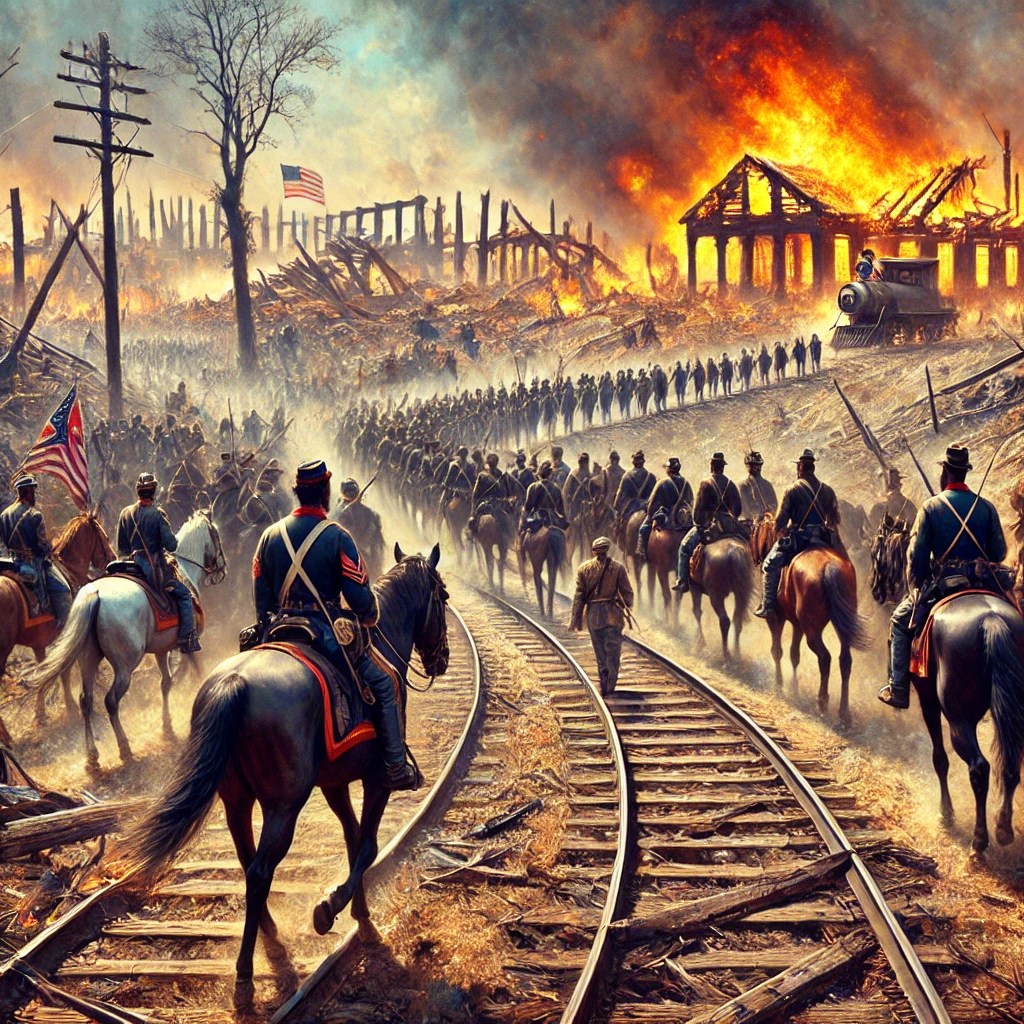
A Bold Gamble
The air in Atlanta was thick with the scent of smoldering embers. It was November 1864, and Major General William Tecumseh Sherman had made a bold decision—one that would go down as one of the most controversial and devastating campaigns of the Civil War. Instead of pursuing Confederate armies head-on, he would cut a fiery path through Georgia, breaking the South’s will to fight by striking at its heartland. His goal? The port of Savannah.
A Moving Wall of Destruction
With 60,000 battle-hardened Union troops, Sherman divided his forces into two columns, spreading chaos and confusion among the enemy. They moved like an unstoppable tide, tearing up railroads, looting supply depots, and burning anything of military value. “War is cruelty,” Sherman had once said, and now, his men embodied that sentiment. Towns fell silent in their wake, with scorched earth left as a warning to all who resisted.
Georgia Trembles
The people of Georgia, accustomed to war being fought on battlefields, were now experiencing its full horror firsthand. As Sherman’s army advanced, slaves seized the opportunity to escape, joining the long blue columns marching through the countryside. Plantation owners watched helplessly as their once-grand estates were reduced to ashes, their wealth consumed by the inferno of war.
For Confederate leaders, the march was a nightmare realized. General John Bell Hood had already been drawn away to Tennessee, leaving Georgia nearly defenseless. Rebel cavalry harassed Sherman’s men, but they were no match for the relentless Union advance.
The Railroad Ripped Asunder
One of Sherman’s most infamous tactics was his destruction of railroads, crucial lifelines for the Confederacy. His men twisted iron rails into warped loops, known as “Sherman’s neckties,” making them useless. Bridges were dynamited, supply trains captured, and telegraph lines cut. The South’s ability to move troops and supplies was crumbling, mile by mile.
Christmas Comes Early
After five weeks of destruction, Sherman’s army reached Savannah on December 21, 1864. The city, seeing the devastation left in his wake, surrendered without a fight. In a telegram to President Lincoln, Sherman offered a now-famous message: “I beg to present you, as a Christmas gift, the city of Savannah.”
His march had been a success. Georgia was crippled, the Confederacy demoralized, and the path to Union victory clearer than ever.
A Legacy of Fire
Sherman’s March to the Sea remains one of the most debated events in American history. To the North, he was a brilliant strategist who hastened the war’s end. To the South, he was a villain who brought ruin and despair. But one thing is undeniable—his campaign changed the nature of war itself, proving that an army’s strength was not just in its guns, but in its ability to break an enemy’s spirit.
The fires of Sherman’s march burned long after the embers had cooled. They left scars on the land and in the hearts of those who witnessed them. But they also paved the way for the end of America’s bloodiest conflict and the beginning of a new chapter in the nation’s history.

 History in 5 Minutes or less
Leave a comment